
Mold Spikes Breathing Suffers
MOLD SCIENCE · MOLDNEWS REVIEW
By the YCM Mold Research Center · Summer 2026 · MoldNews Review Vol.1 Issue 2
How mold shifts in the air trigger asthma and allergies
ir quality in indoor spaces is a growing concern, with great effects on public health.
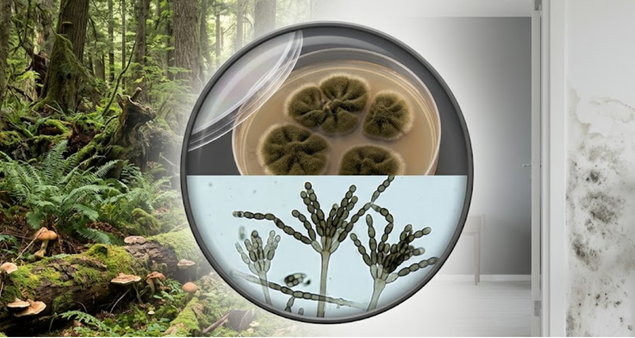
Mold spores are airborne biological pollutants which are strongly linked to various breathing conditions. Mold is found everywhere and grows easily indoors. Inhaling its spores can trigger allergies or cause serious health issues.
Many studies show a complex link between mold levels and breathing symptoms. These symptoms are influenced by weather, personal sensitivity, and other air pollutants.
However, the exact relationship remains unclear because different studies use inconsistent methods. Furthermore, climate change and extreme weather are changing how mold grows, increasing mold levels indoors and outdoors, further risking human health.
Mold Concentration and Asthma
While the exact biological mechanism behind asthma and its links to mold is not fully understood, strong evidence suggests that mold can trigger symptoms in asthma patients.
Mold is a fungus that reproduces through spores and is common in indoor dust, especially in poorly ventilated buildings. Because these spores travel easily through the air, people can inhale them, which can trigger allergic reactions or worsen asthma symptoms.
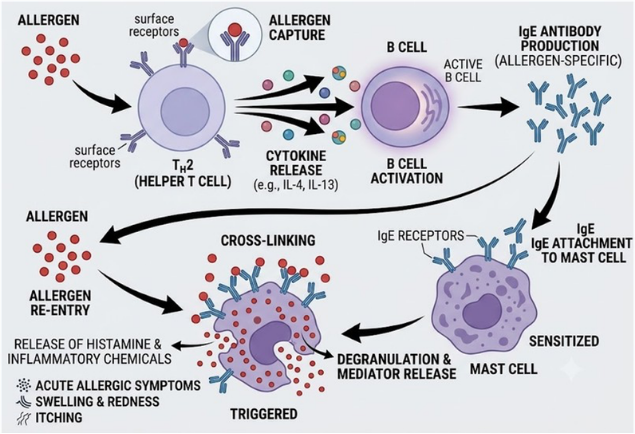
For people prone to allergies, mold spores act as major allergens that trigger allergen-specific IgE antibodies, causing a Type I hypersensitivity reaction.
Allergens are captured by the surface receptors of a helper T cell
The helper T cell releases cytokines, which activate B cells
The B cell produces IgE antibody tailored to that allergen
The IgE antibodies attach to a mast cell, acting as armor
When allergens re-enter the body, they attaches to the antibodies on the mast cell
Degranulation of the mast cell floods the surrounding tissue with inflammatory chemicals
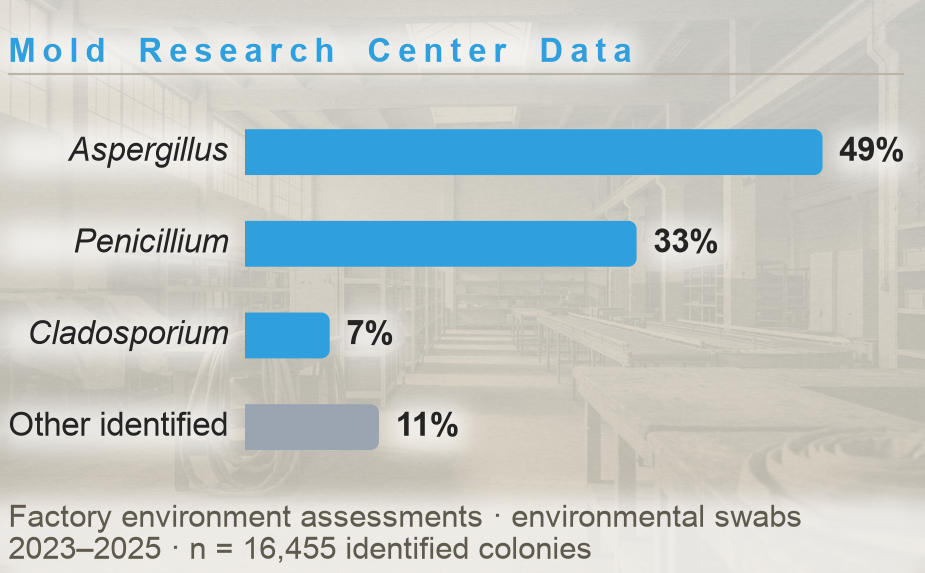
Common indoor molds like Cladosporium, Aspergillus and Penicillium are known culprits. Among fungal colonies identified in Mold Research Center’s factory environment assessments from 2023 to 2025, Aspergillus, Penicillium and Cladosporium together accounted for 89% of all identified colonies — closely matching the genera most often flagged in asthma research. The protein structure and enzymatic components of these spores make them highly irritating to the lungs. Therefore, higher mold levels indoors are associated with asthma attacks and hospital admissions for asthma.
Monitoring indoor mold levels can help better manage asthma. For medical professionals, understanding how mold changes with the seasons is essential for tailoring patient treatment and prevention plans.
Air Quality and Chronic Respiratory Diseases
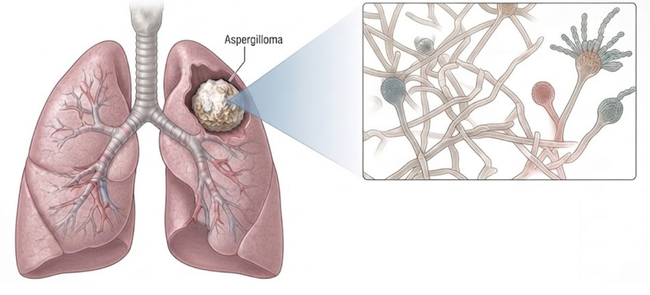
Numerous studies show that indoor mold concentrations significantly worsen respiratory conditions, such as asthma, chronic bronchitis, and COPD.
Along with tobacco smoke, nitrogen dioxide, and particulate matter, mold is a recognized biological pollutant: its spores and metabolites are linked to the onset and worsening of asthma and COPD.
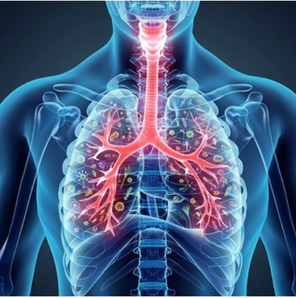
Indoor moisture and water leaks promote rapid mold growth, driving up airborne spore levels. This exposure triggers symptoms in sensitive people and can cause healthy individuals to develop airway sensitivities.
At the molecular level, mold spores and toxins induce immune reactions that lead directly to airway inflammation. Ultimately, long-term exposure to high mold levels in poorly ventilated spaces keeps the respiratory system in a chronic inflammatory state, worsening the development of these diseases.
Studies on mold and lung health don't always agree. Exposing children to environmental mold early in life might sometimes protect them from developing certain breathing issues. This is tied to the "hygiene hypothesis"—the idea that encountering microbes early on helps train the immune system to prevent allergies. However, this benefit isn't found in adults, and scientists are still debating it.
Impact of Climate Change on Mold Growth
Climate change increasingly drives indoor mold growth, especially during extreme weather like heavy rains, floods, and storms. These events directly and indirectly promote mold both indoors and outdoors. Floods, in particular, create ideal conditions for mold by raising local temperatures and humidity.
Research shows that climate change alters how hard and how often it rains. This shifts precipitation patterns, which not only makes floods more likely but also causes indoor humidity levels to rise, worsening mold problems. Even after the water is pumped out, the leftover dampness stays behind and acts as a constant breeding ground. Because of this, indoor mold ruins living conditions for a long time and damages the lungs of the people living there.
Mold has a direct impact on asthma and other breathing problems, especially after severe weather. For example, studies show that homes hit hard by hurricanes like Katrina and Rita saw a massive surge in mold growth. These natural disasters completely change the mix of the microbial community living inside a house, which could have long-lasting effects on residents' health. On top of that, the cleanup and repair workers are exposed to large volumes of mold and fungal spores, putting them at a much higher risk of lung disease.
Addressing this will require cutting greenhouse gas emissions and improving building design. Updating building codes to withstand extreme weather—and ensuring existing codes are followed—are also key steps. For example, changing building standards to protect against extreme weather and ensuring people follow current codes are vital steps.
Avoiding new construction in flood-prone areas and improving neighborhood drainage can also reduce risk. Buildings can be protected by improving airflow, upgrading waterproofing, and using moisture-blocking layers in walls and floors to keep indoor humidity low.

Climate change affects both indoor and outdoor mold by creating environmental conditions that favor mold growth and increase airborne mold exposure, which may contribute to a higher risk of chronic and mold-related lung diseases. However, the exact biological mechanisms and level of risk are still not fully understood. Future research should focus on quantifying mold exposure more accurately, identifying the risks associated with specific mold species, and clarifying how these molds interact with the immune system.