Beyond Spoilage
RISK IN FOCUS
Aflatoxin contamination in the food chain
Food spoilage can hide more than unpleasant flavors.
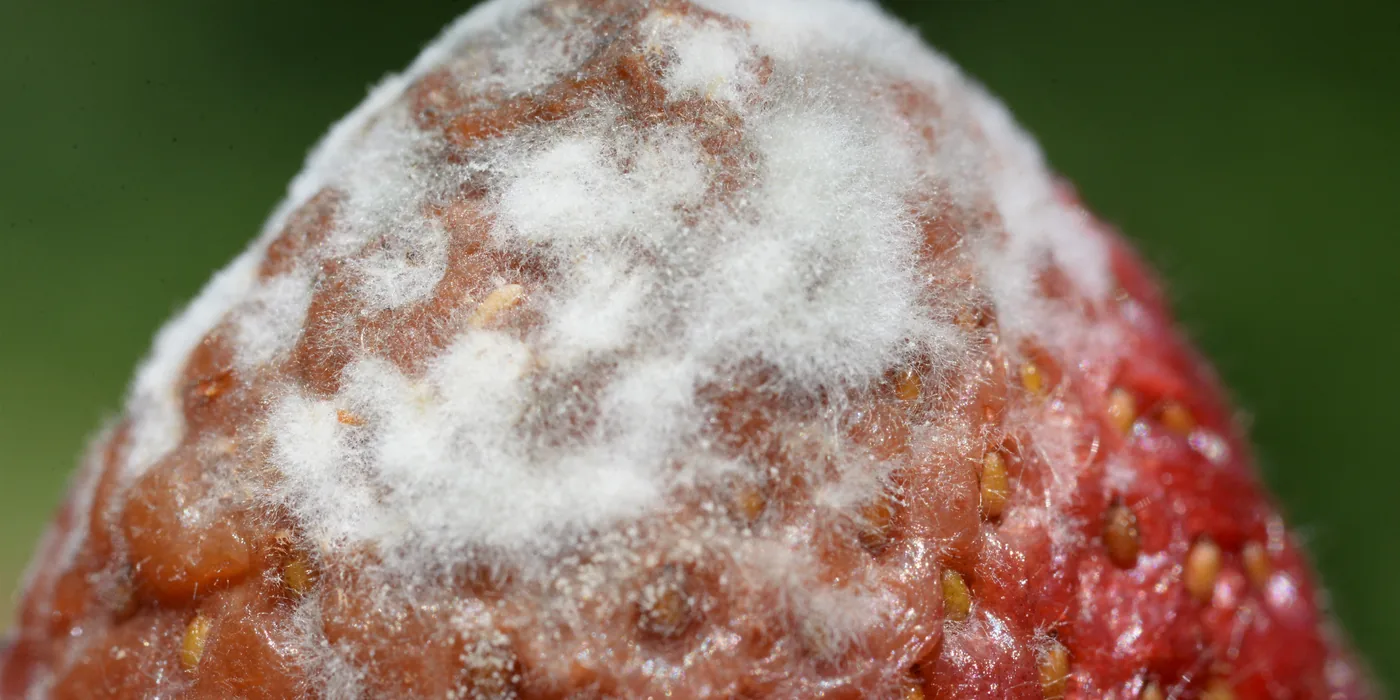
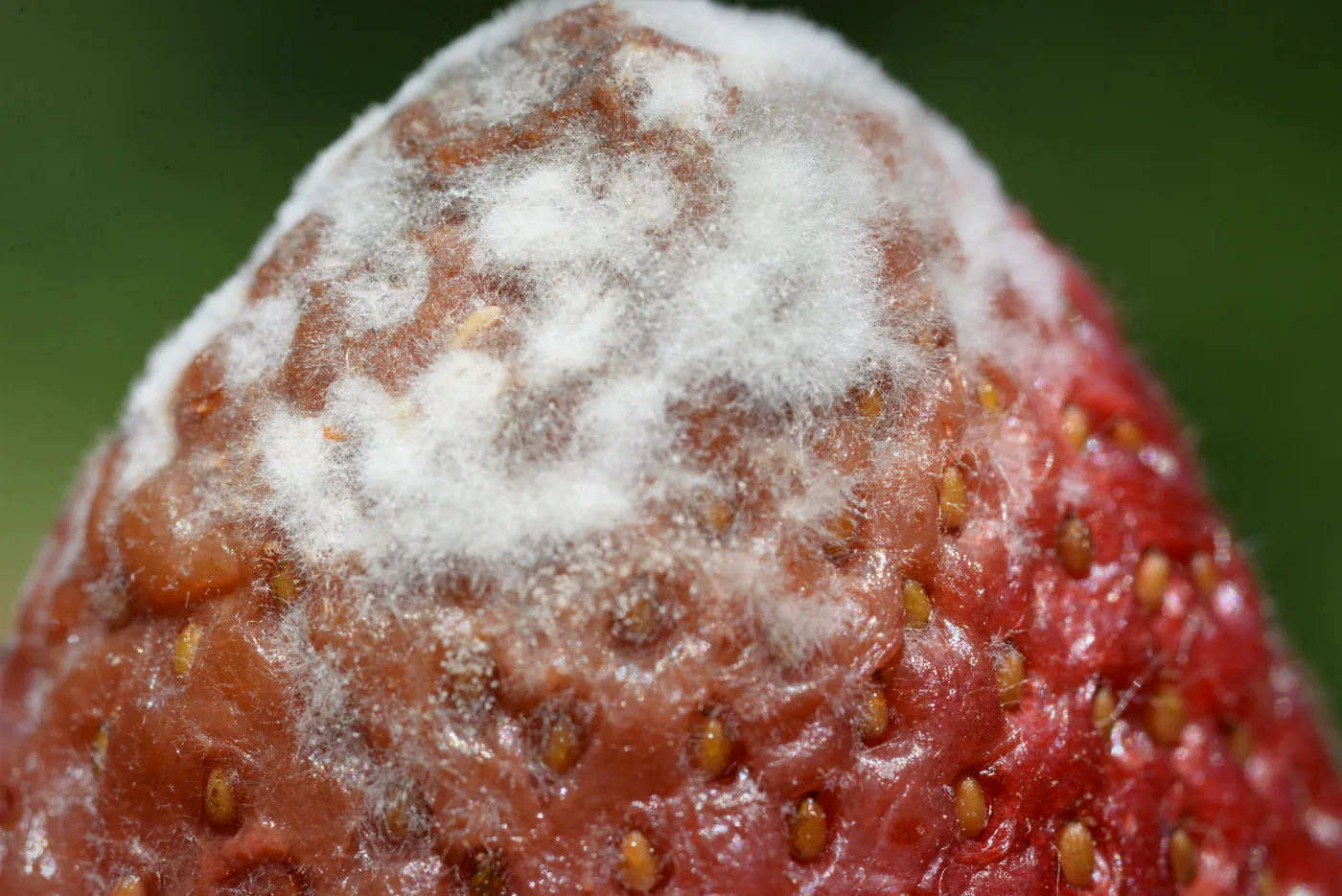
A patch of fuzzy mold brings up worries beyond spoiling a meal, it’s the invisible threat of aflatoxins. This toxic agent is naturally produced by certain molds, particularly Aspergillus flavus and Aspergillus parasiticus. These molds thrive in warm, tropical climates, especially on crops. Aflatoxins can pose serious health risks if you swallow contaminated food, so understanding the risks and taking precautions is key for keeping your plate safe.
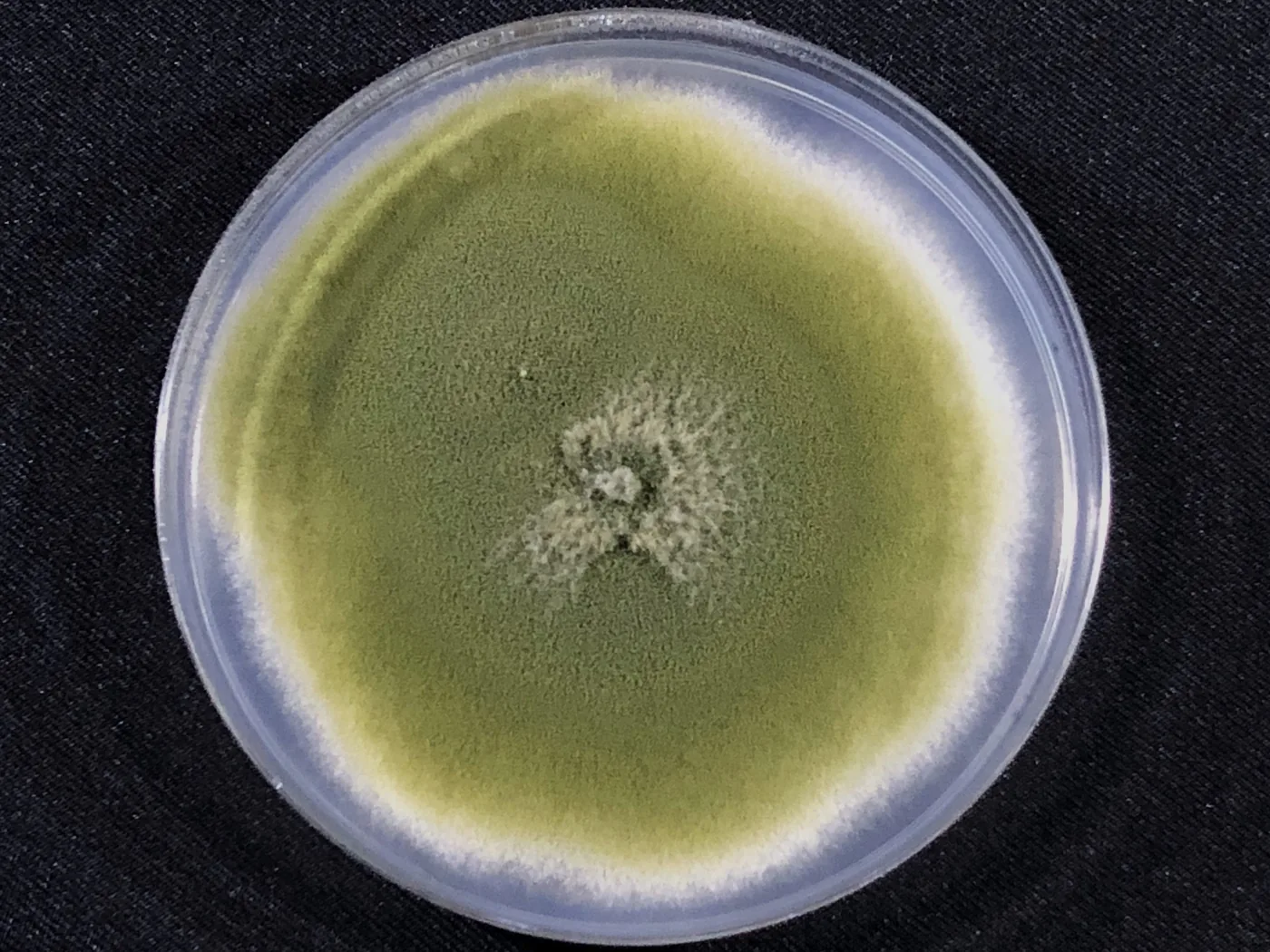
Photo: Mold Research Center.
The most common type of aflatoxins is Aflatoxin B1 (AFB1), which is found on crops, such as corn, peanuts, soybeans, and wheat. When an animal digests a contaminated crop, the aflatoxin is converted into Aflatoxin M1 (AFM1), which is why AFM1 can be found in milk from dairy cows.
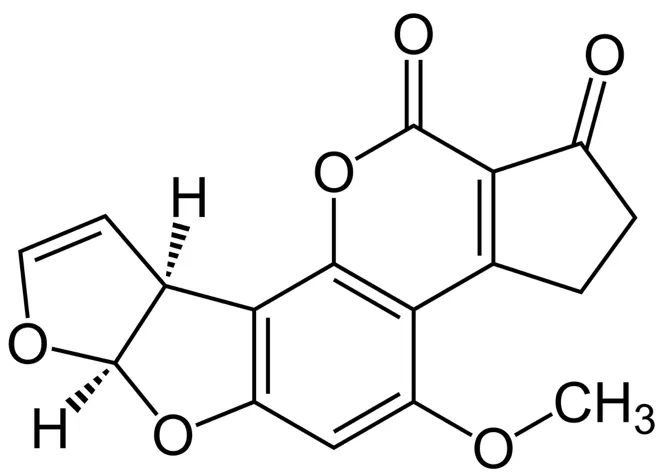
Aflatoxin can form in the field and continue to build up when crops are poorly dried or stored. People that rely on homegrown grains and nuts are the most vulnerable to exposure. Poverty, limited food safety awareness, and poor hygiene increase this risk.
Health Hazards
Aflatoxins rank among the most powerful natural toxins known, and they are classified as strong human carcinogens. Because the liver is responsible for processing and breaking down these toxins, it bears the heaviest burden. Long-term exposure can lead to severe liver damage, impaired function, and cancers like hepatocellular carcinoma (HCC). This cancer risk spikes even higher if a person is also infected with the hepatitis B virus.
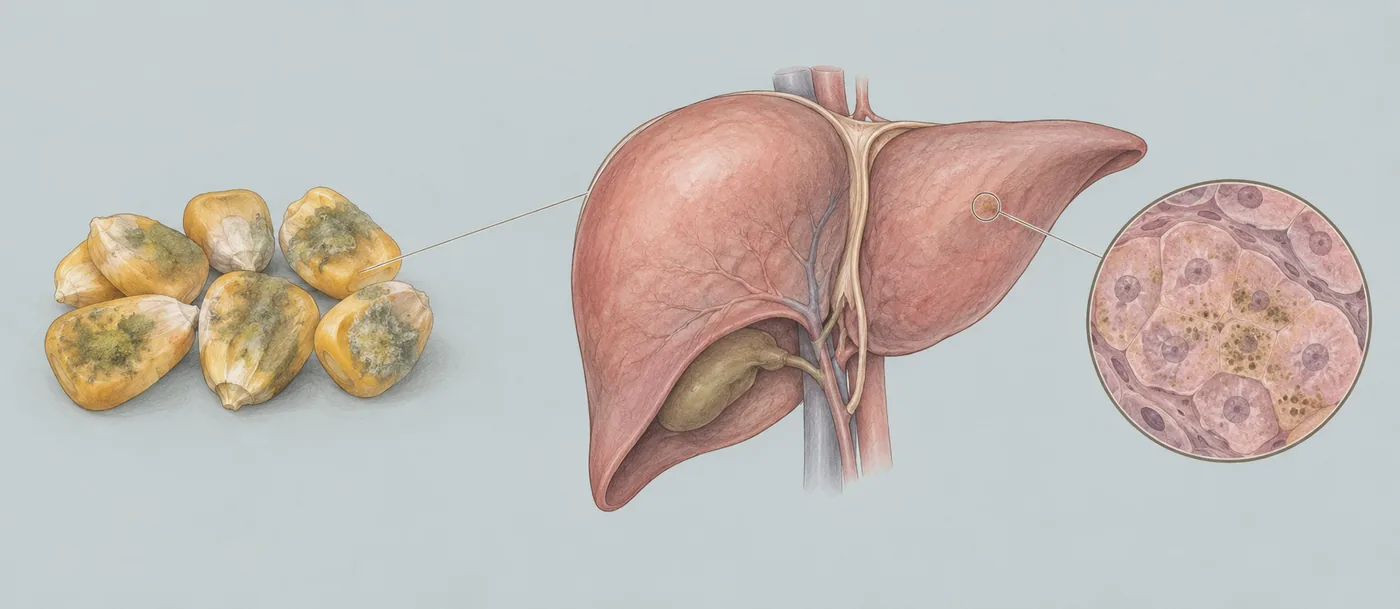
Beyond liver health, aflatoxins can also trigger neurological issues and related disorders. In acute cases of poisoning, symptoms range from upset digestion, rapid weight loss, and jaundice to neurological distress, internal bleeding, and even death in the most severe cases. Furthermore, living or growing up in environments contaminated with aflatoxins can quietly derail a child’s development, stunting their height, slowing weight gain, and weakening their developing immune system.
How The Food Industry Fights Back
Because aflatoxins pose a serious danger to food safety, food producers have to enforce several measures to protect product quality and safety.
First of all, to prevent aflatoxin contamination, very strict control of raw materials is needed. The grains, nuts, seeds, and other materials that come into the production process have to be completely clean. By cutting the problem off at the source, facilities effectively reduce the risk of aflatoxin entering the food supply.
Secondly, maintaining proper storage and the way the food and materials are handled throughout the whole chain. This includes the production stages, pre-shipping storage, and during transportation, minimizing any opportunities for mold to grow and form toxins.
Third, facilities establish advanced testing and monitoring systems. The Hazard Analysis and Critical Control Points (HACCP) are used to anticipate and prevent safety hazards before they happen by identifying potential dangers, set monitoring limits, and take immediate corrective action. Testing tools such as chromatography, spectroscopy, and ELISA are useful to test aflatoxin levels in raw materials, semi-finished goods, and finished products. This enables timely detection of problems and swift action to ensure product safety. Drying crops promptly limits further toxin formation, and sorting out damaged kernels can lower contamination. Aflatoxins are heat-stable, however, so ordinary cooking or freezing does not remove them.
Fourth, maintaining strict cleanliness and hygiene in the production environment can successfully prevent mold growth, which in turn cuts down the risk of food contamination by aflatoxins.
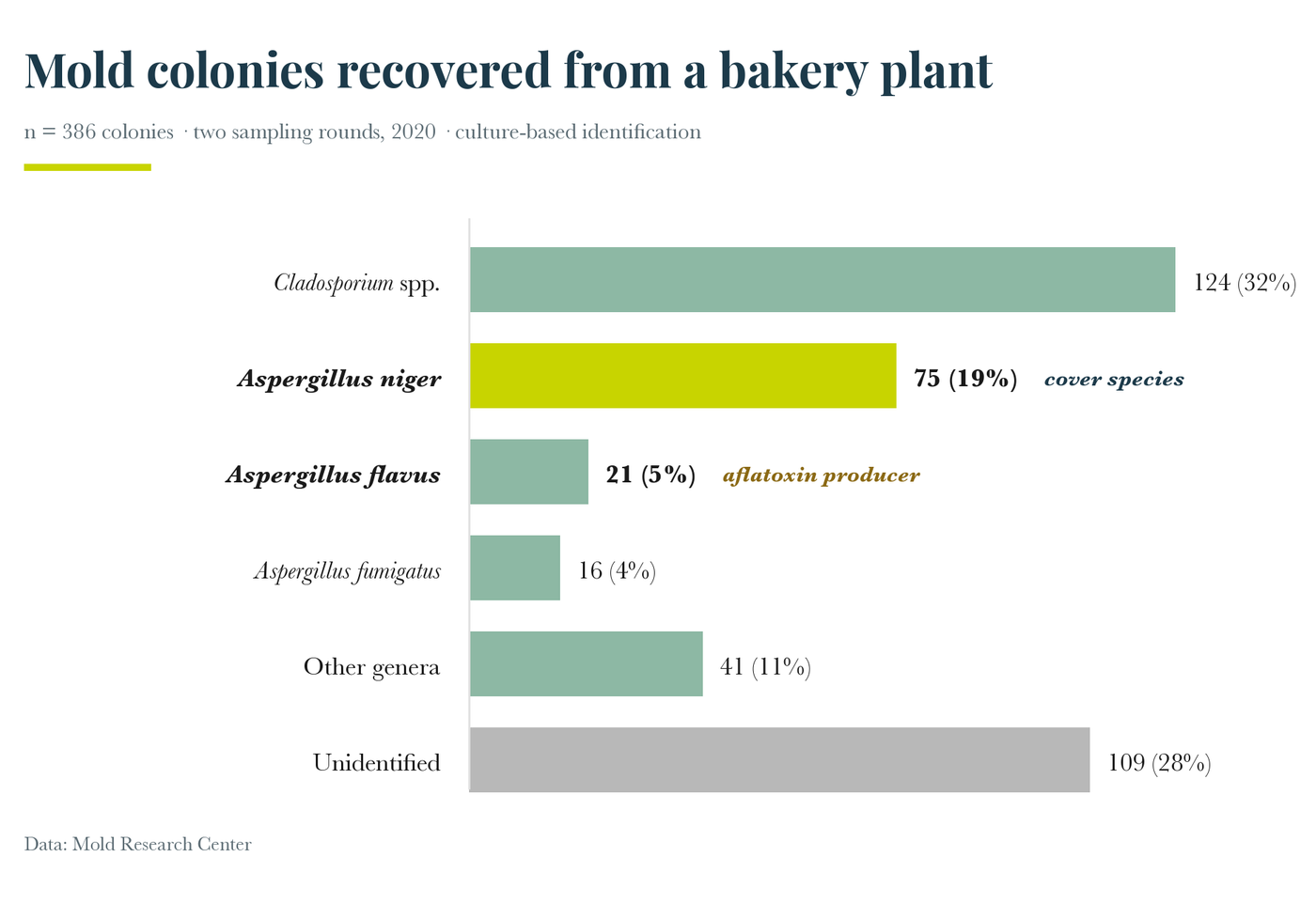
In environmental samples from a bakery plant in Taiwan, the Mold Research Center recovered 386 mold colonies. Cladosporium was the most common genus, while Aspergillus niger, the species on this issue’s cover, led the Aspergillus group with 75 colonies. A. flavus, the species most closely linked to aflatoxin, was also present with 21 colonies, a reminder that production areas need routine mold monitoring.
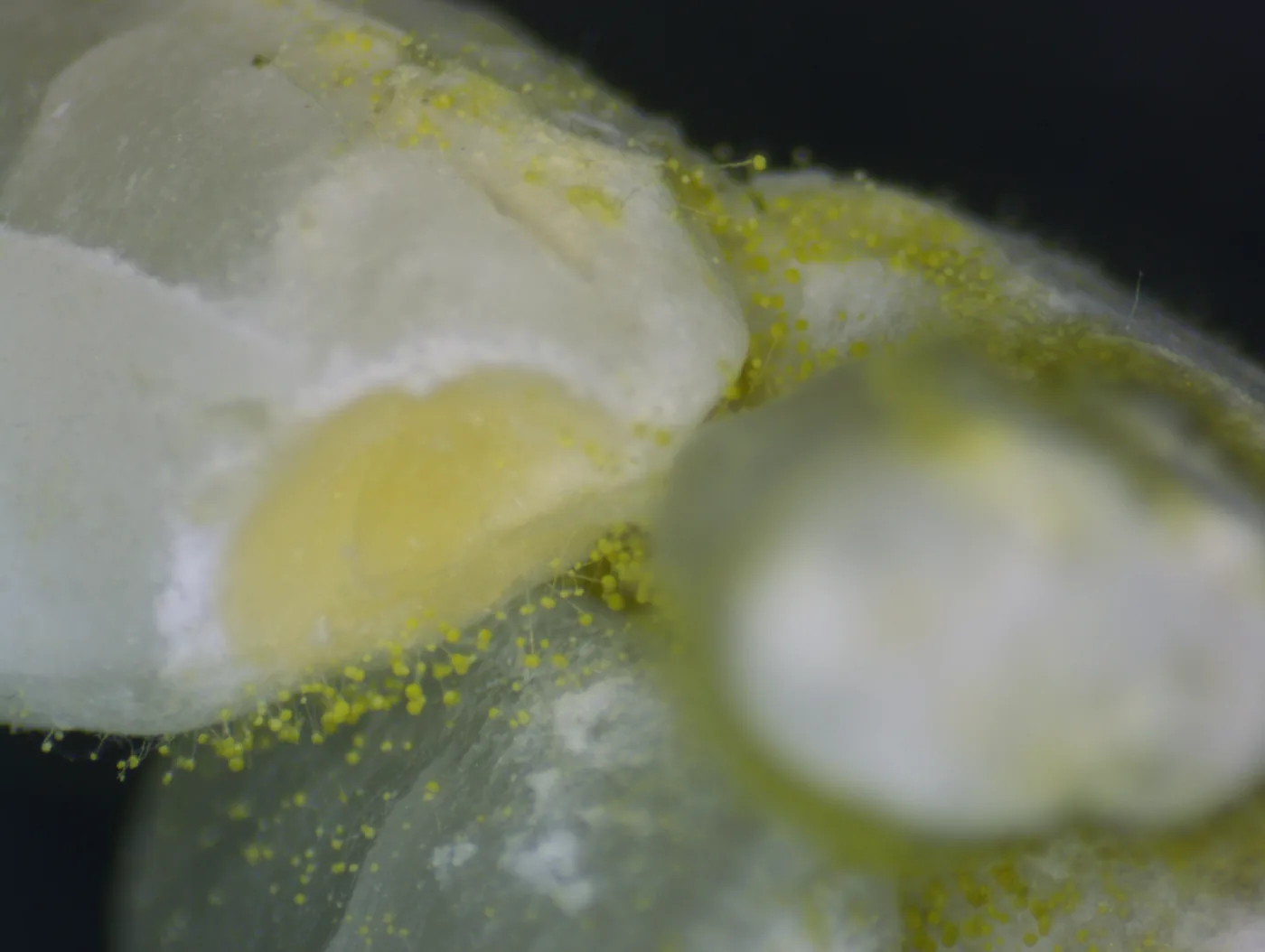
Photo: Mold Research Center
And last but not least, all staff handling the raw materials and food products need to be made aware regarding aflatoxin risks. Training increases response capabilities, improving the safety and overall quality of the food production process.
This article has covered where aflatoxins come from and how they are distributed, their severe health hazards, and the response measures required within the food industry.
These toxins are made by Aspergillus molds that are found in crops of the tropical and subtropical regions. They have become a massive global health issue, hitting developing communities with limited food supplies the hardest.
The effect these toxins have on the body is alarming. They are carcinogens that can cause liver damage, suppress the immune system, and stunt growth and development.
Fortunately, the food industry isn’t sitting still. Raw ingredients are strictly controlled, handling is optimized, and advanced testing technology is used to monitor and prevent further risks. Ultimately, because aflatoxins are so widespread and dangerous, protecting the global public means bringing everyone together through stronger communicated knowledge.