Home>MOLDNEWS REVIEW>MOLDNEWS REVIEW>Vol.1 Issue 2 — August 2026>Mold Monitoring To Manage Allergies


Mold Monitoring To Manage Allergies
MEASURE & DETECT · MOLDNEWS REVIEW
By the YCM Mold Research Center · Summer 2026 · MoldNews Review Vol.1 Issue 2
How the Houston Health Department manages seasonal allergies
he Houston Health Department now monitors daily allergen levels, including mold and pollen. Since more than 80 million Americans suffer from seasonal or environmental allergies each year, this local tracking system is a vital public health tool that helps people predict and manage their symptoms.
This system tracks shifts in airborne particles such as pollen and fungal spores, which change constantly based on the weather, plant life cycles, and regional climate. By sharing this data openly, health officials want to help community members make informed decisions for their daily lives.
The monitoring program is conducted in a laboratory certified by the American Academy of Allergy, Asthma & Immunology. To get accurate readings, the team uses specialized air-sampling equipment that continuously traps airborne particles over a 24-hour window.
- A vacuum system inside the device continuously pulls in pollen and mold spores from the surrounding air.
- Scientists examine the collected samples under a microscope, looking closely at their size, shape, and structure (morphology).
- Based on those physical traits, the scientists identify the specific types of allergens and count how many are present.
This process provides the basis for the city's daily allergen reports.
Seasonal Patterns of Pollen in the Region
The report shows that the Houston area follows a clear seasonal pattern when it comes to pollen.
Tree pollen is highly active in the spring, with species like cedar, elm, birch, and pine all filling the air. Out of all of these, oak pollen is the biggest contributor and typically hits its highest peak in mid-to-late March. As temperatures climb later in the spring, grass pollen begins to take over and stays prominent all the way through the summer months. Later in the year, weed pollen emerges, starting in the summer and extending deep into the fall. Because these allergens shift so clearly with the seasons, a person's symptoms can change throughout the year depending on their specific sensitivities.

Unlike pollen, which follows predictable seasonal cycles, mold spores are a constant factor in the environment and stay present year-round. However, the amount of mold in the air jumps significantly under specific conditions, especially during warm, humid, and rainy weather. The report notes that mold levels often rise during the late spring and summer, as well as right after major weather events like heavy rainfall or hurricanes.
These wet, warm conditions let fungi grow rapidly and release their spores into the air. Because breathing in mold can trigger respiratory issues and allergic reactions, tracking these levels alongside pollen supports public health.
How Allergies Develop
Seasonal allergies are an immune system response to substances that are usually harmless, like pollen or mold spores. When you breathe these tiny particles in, your body can mistake them for dangerous threats and trigger a defensive reaction.
This internal mix-up causes your body to release chemicals that lead to classic symptoms like sneezing, nasal congestion, itchy eyes, and an irritated airway. How bad these symptoms get depends largely on how sensitive you are to that specific trigger and how much of it is in the air. While the report focuses mostly on pollen allergies, it notes that mold spores cause these exact same types of reactions.
Prevention and Treatment
Health officials emphasize that prevention is the most effective approach to managing seasonal allergies. One of the key recommendations is to monitor daily pollen and mold levels so you can adjust your activities accordingly.
On days when pollen counts are high, you should try to stay indoors as much as possible. If you do need to go outside, avoiding the early morning hours when pollen levels are usually at their highest can help reduce your exposure. After coming back inside, simple steps like showering, washing your hair, and changing your clothes will help remove any pollen that stuck to your body or clothing.
The indoor environment also plays a major role in how well you manage your allergies. It is advised to keep windows tightly closed during high pollen periods to stop allergens from drifting into your home. Using high-quality air filters in your heating, ventilation, and air conditioning systems will help lower the concentration of airborne particles indoors. Keeping your living spaces clean and controlling indoor humidity levels will further minimize your exposure, which is especially important if you suffer from persistent or severe allergies.
The report also outlines common medical treatments to help manage allergy symptoms.

- Antihistamines (cetirizine and loratadine) are recommended as your first option because they work well and are less likely to make you feel drowsy.
- Nasal sprays, including both corticosteroid and antihistamine formulas, are also highly effective treatments. However, keep in mind that corticosteroid sprays must be used consistently over time to work fully.
- Decongestant nasal sprays can give you quick, short-term relief for severe stuffiness, but you should limit their use to avoid rebound congestion.
- Simple saline solutions are a great supportive treatment to help clear out your nasal passages and soothe irritation.
The report also includes specific guidance for different age groups, noting that adults may benefit from nasal saline washes, while infants and young children should use saline sprays specifically designed for their age. Matching treatment options to a person's age keeps them both safe and effective.
Public Access and Environmental Awareness in Public Health
The Houston Health Department shares all of its pollen and mold data directly with the public through its official platform, so you can check daily conditions and plan outdoor activities and medicine use accordingly. By combining scientific tracking with clear public communication, the program connects raw environmental data with everyday health choices.
The report also highlights how much a little environmental awareness can improve health. While allergens like pollen and mold are a natural part of the environment, you can heavily cut down their impact on your life by staying informed and using preventive habits. When you understand how changing weather and seasons affect allergen levels, you can predict high-risk days and limit your exposure before symptoms even start.
Overall, the Houston Health Department’s monitoring program is all about prevention. By tracking these environmental factors and offering practical advice, the initiative helps everyone manage their seasonal allergies much more effectively. Instead of waiting to react to an allergy attack, the system encourages you to take proactive steps that prevent discomfort and improve your daily quality of life.
This combination of scientific monitoring, public education, and accessible data is one model other local health departments could adapt. As the environment continues to affect our daily well-being, similar programs will likely become more important in other cities. This example shows how a local health department can address a recurring public health challenge through data monitoring and public communication.
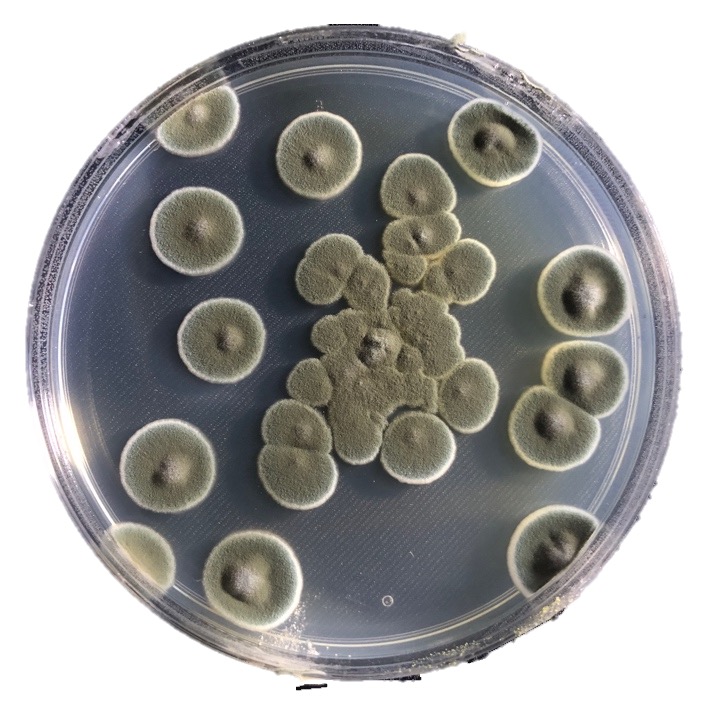
Cladosporium colonies after five days on potato dextrose agar (PDA) — the olive-green, velvety growth that makes this genus recognizable on damp indoor surfaces.
Photo: Mold Research Center