Turning Yellow
EXPERT GUIDELINES & PRACTICE
The mystery of color stains on fabric
Textile products often show color spots and stains.
Brands and factories see this as a frustrating headache. Because so many different things can trigger this discoloration, finding the root cause can feel like detective work. Among the many possible causes, microbial contamination by mold and bacteria is a common one.
The Microbial Threat
Microbial yellowing typically stems from either mold or bacteria contamination. When mold attacks textiles, its natural pigments along with the metabolites it can release alter the fabric’s color. Depending on the specific mold strain and its unique characteristics, this can result in various discoloration shades, not only yellow.
Bacteria can also contribute to yellowing. The production process of textiles allows many opportunities for bacterial contamination, in manufacturing, inspection, and transportation. For example, if a worker handles fabrics with sweaty hands, proteins and bacteria can be left behind on the material. If the fabric is not cleaned promptly, residual proteins and bacteria, combined with light, air, and moisture, can lead to persistent yellow stains.
However, not all yellowing is biological. Other common non-microbiological causes include oil stains or rust picked up during the manufacturing process, improper detergents during washing that leave behind pigmentation, chemical reactions from additives, and natural degradation of fabric fibers over time.
Diagnosing and Fixing Textile Discoloration
Before choosing a solution, it is important to know how the discoloration occurred. Because textile yellowing can stem from so many different roots, each requiring a totally unique solution, identifying the exact cause is a mandatory first step before treating the fabric.
Fortunately, specialized expertise is within reach: The YCM Mold Research Center (MRC) offers advanced technology to help pinpoint the exact source of yellowing. Brands have successfully decoded their discoloration mysteries and solved their textile troubles for good.
When the Culprit Isn’t Mold
A stain that looks like mold is not always mold. Two recent cases at the Mold Research Center show what else it can be.
In the first case, white powdery spots on textile shoe linings looked like early mold growth. Under the microscope, the spots turned out to be crystals, not mold.
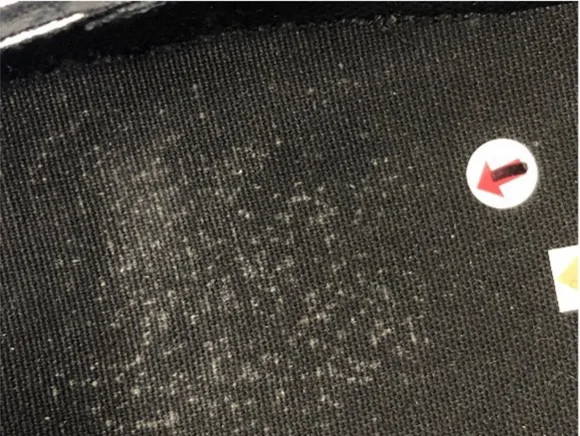
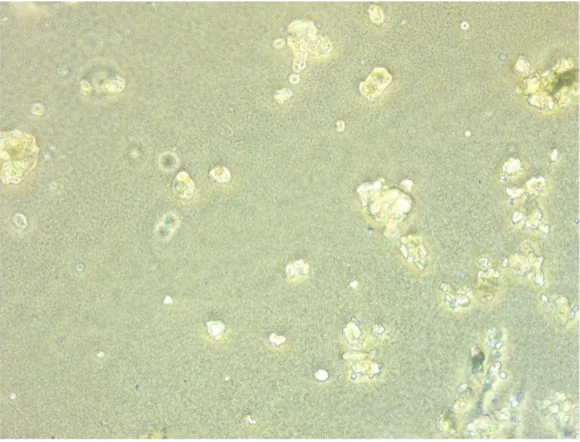
Bottom: under the light microscope, the deposits resolve into amorphous crystalline particles, with no hyphae or spores in sight. The likely culprit: residual salts from dyeing and finishing, drawn to the fabric surface by evaporating moisture and left behind as crystals.
Photo: Mold Research Center
In the second, white haze-like patches on a batch of jackets were also suspected to be mold. Culturing identified the growth as yeast, which under favorable conditions can spread and yellow the fabric it grows on.
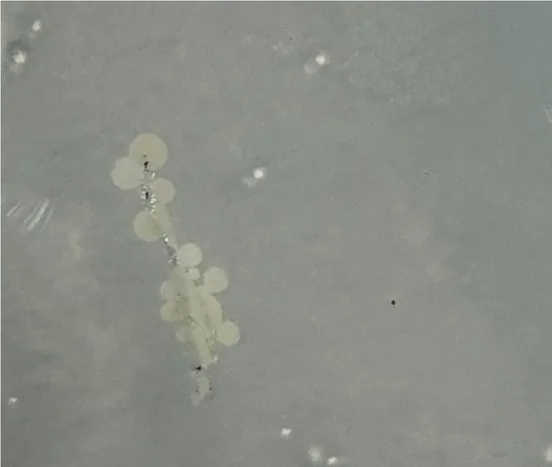
Photo: Mold Research Center
Case File: Brand X’s Mysteriously Yellowing Fabrics
It starts as every apparel brand’s nightmare: batches of pristine, finished clothing started developing mysterious yellow spots and color stains.
For Brand X, this discoloration threatened product quality and risked costly production delays. But what was causing it?
The Investigation: Under the Microscope
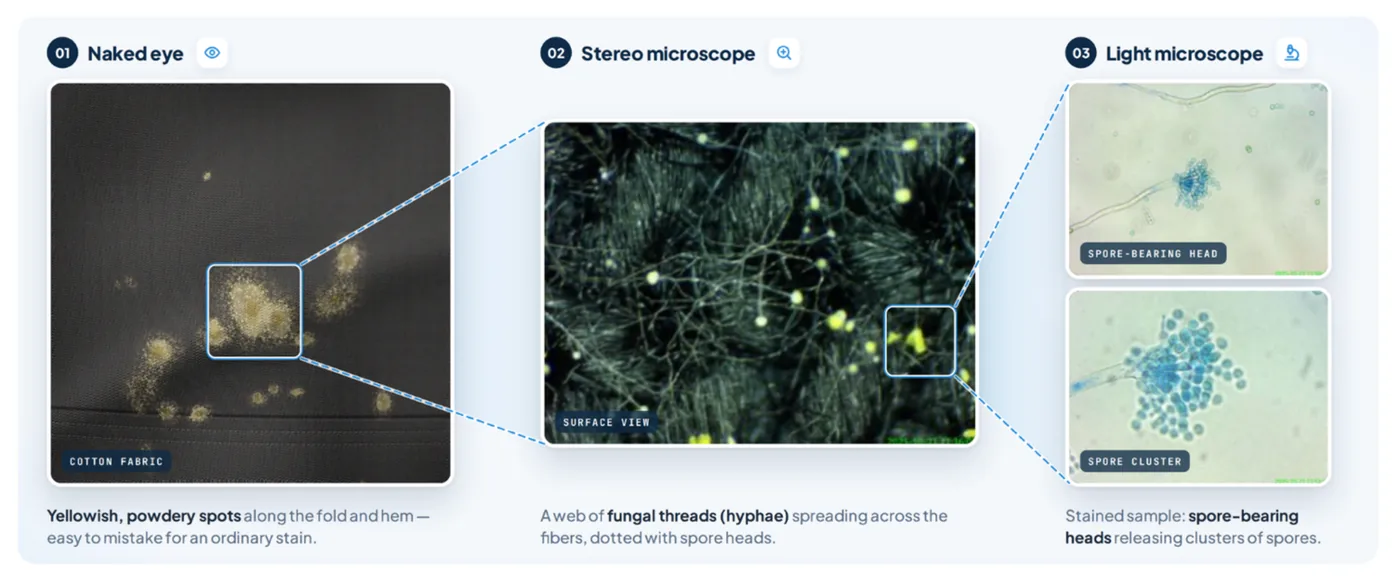
To crack the case, the samples were sent to the YCM Mold Research Center. Using advanced microscopic analysis, the team zoomed in on the fabric fibers to reveal what the naked eye couldn’t see.
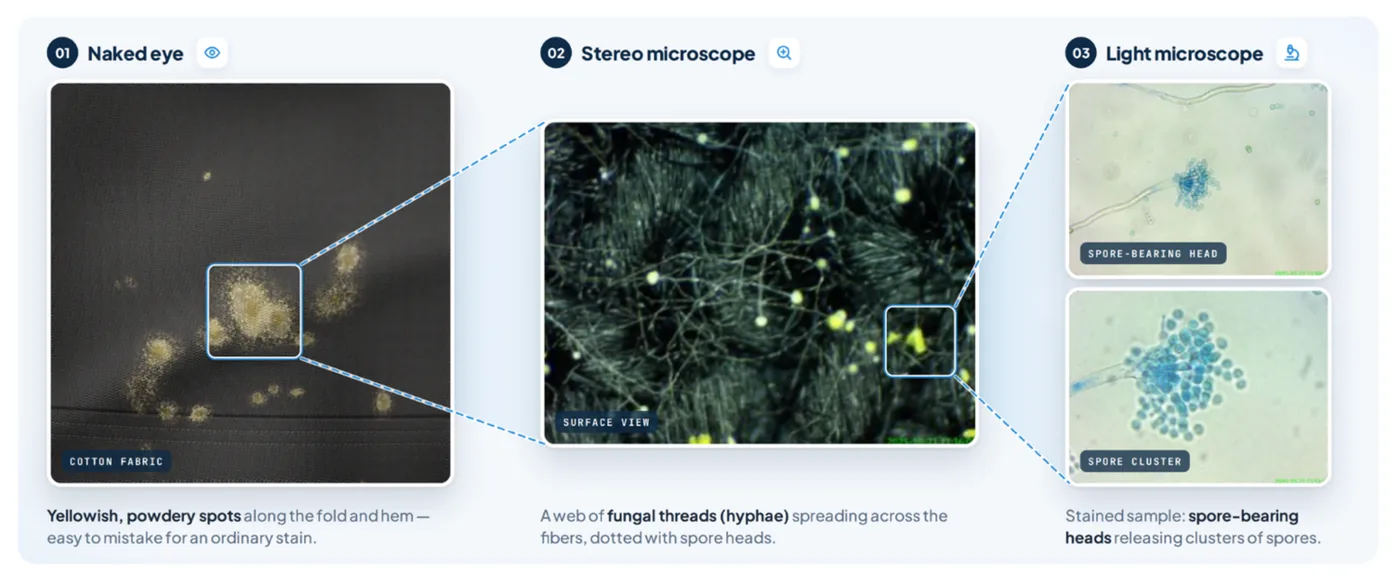
Photo: Mold Research Center
Initial testing and analysis revealed that the yellow spots on Brand X’s fabric were driven by mold contamination.
Under magnification, mold growth was visible on the surface and between the fibers of the weave. By isolating and culturing the mold from the samples, the species present were identified.
The investigation covered the finished goods, raw materials, and the production environment.
Whatever the culprit, mold, residues, or yeast, identifying the cause early helps limit further damage.