Built To Decay
MOLD NEWS HUB
Preventing Mold in Your Building Materials
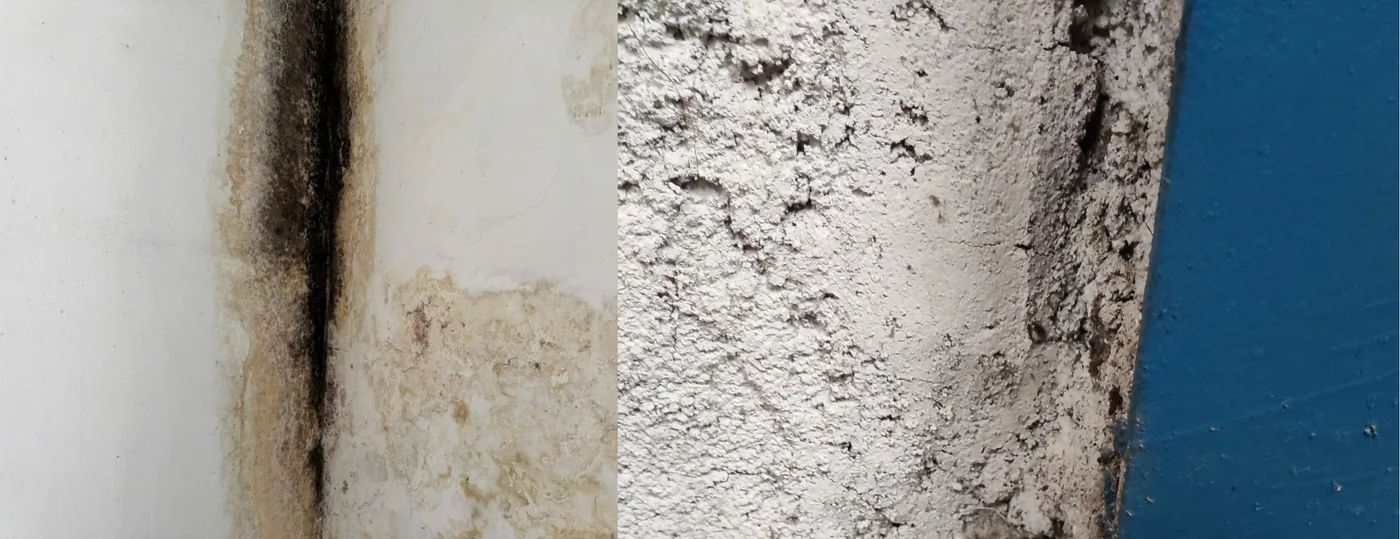
Photo: Mold Research Center
The building materials inside your home can become contaminated with mold.
You might notice black spots along a wall corner, yellow stains on a wooden shelf, or a musty smell when opening your closet. These small details often mean one thing: mold has quietly found a home in yours.
To keep your living spaces healthy, the first rule of defense is understanding the materials inside your house. Some structural elements and furnishings are naturally more welcoming to fungi than others.
The Cost of Building Mold
Mold on building materials is more than a cosmetic problem. Fungal growth gradually breaks down the materials it lives on: painted surfaces stain permanently, gypsum boards soften, and wooden structures lose strength as decay progresses. What begins as a patch of discoloration can end in replacement work that costs far more than early prevention.
The impact is not limited to the structure itself. Established colonies release spores and musty odors (microbial volatile organic compounds) into the indoor air, and elevated spore levels can trigger allergic reactions and aggravate asthma in sensitive occupants.
The same applies beyond the home. In offices, warehouses, and factories, a colonized wall or ceiling acts as a continuous spore source — contaminating the air, settling on stored goods and raw materials, and undoing climate control efforts. For manufacturers, controlling mold on the building itself is the first step in protecting the products inside it.
Drywall (Gypsum Board)
Drywall is commonly found as a part of interior walls, ceilings, and bathroom partitions. Its surface is made up of paper, which contains cellulose, perfect for mold to grow on. Meanwhile, the inner gypsum core is naturally porous, with the ability to retain moisture for long periods. Even after a pipe leak or some condensation, gypsum can still hold onto the moisture. When water seeps behind paint or wallpaper, those inner layers stay damp and dark, allowing colonies to grow completely unseen.
Hints of potentially moldy drywall to watch for include bubbles under paint, mysterious yellow water stains, or peeling wallpaper, serving as distress signals that indicate your wall cavity may already be compromised.
To prevent this, always prioritize choosing moisture-resistant boards or non-cellulose surfaces, especially if you live in high-humidity areas. If there is ever a plumbing or ceiling leak, fix the source of the water right away, before it reaches the wall cavity.
Wooden Furniture and Flooring
Wooden items like bookshelves, wardrobes, and bed frames, and even wood floors, contain lignin and hemicellulose. Fungi can easily break down and digest these organic polymers.
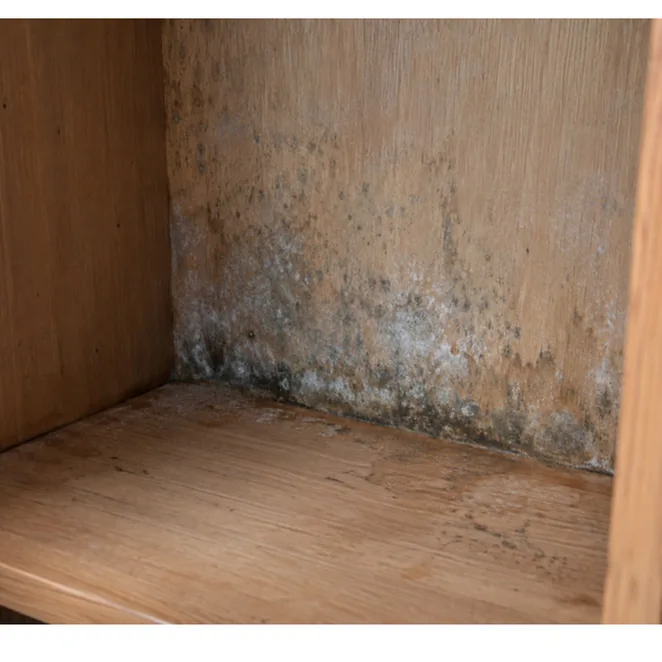
Wood also absorbs moisture very well, and when it does, it naturally expands and contracts as it absorbs and releases moisture. This movement can develop very small cracks and pores in the wood, which allow spores to settle and germinate.
When wooden furniture is placed up against an exterior wall, it traps humidity and chokes off air circulation. When there is a temperature difference, condensation slowly builds, and trickles into the wood.
Look for darkened edges, unusual discoloration, or a distinct damp chill radiating from behind wooden panels. Prevention is simple: keep large furniture at least 5 to 10 cm away from walls to maintain steady airflow, and treat wooden surfaces with protective finishes.
Fabrics and Textiles
Curtains, carpets, closets, and window zones are frequent targets because cellulose-based fibers like cotton, linen, and viscose, and protein-based fibers like wool and silk, give microbes plenty to feed on.
Textiles are also porous and can be hard to dry. When clothes are stacked or heavy curtains are left bunched up against cold walls, condensation and dust get trapped.
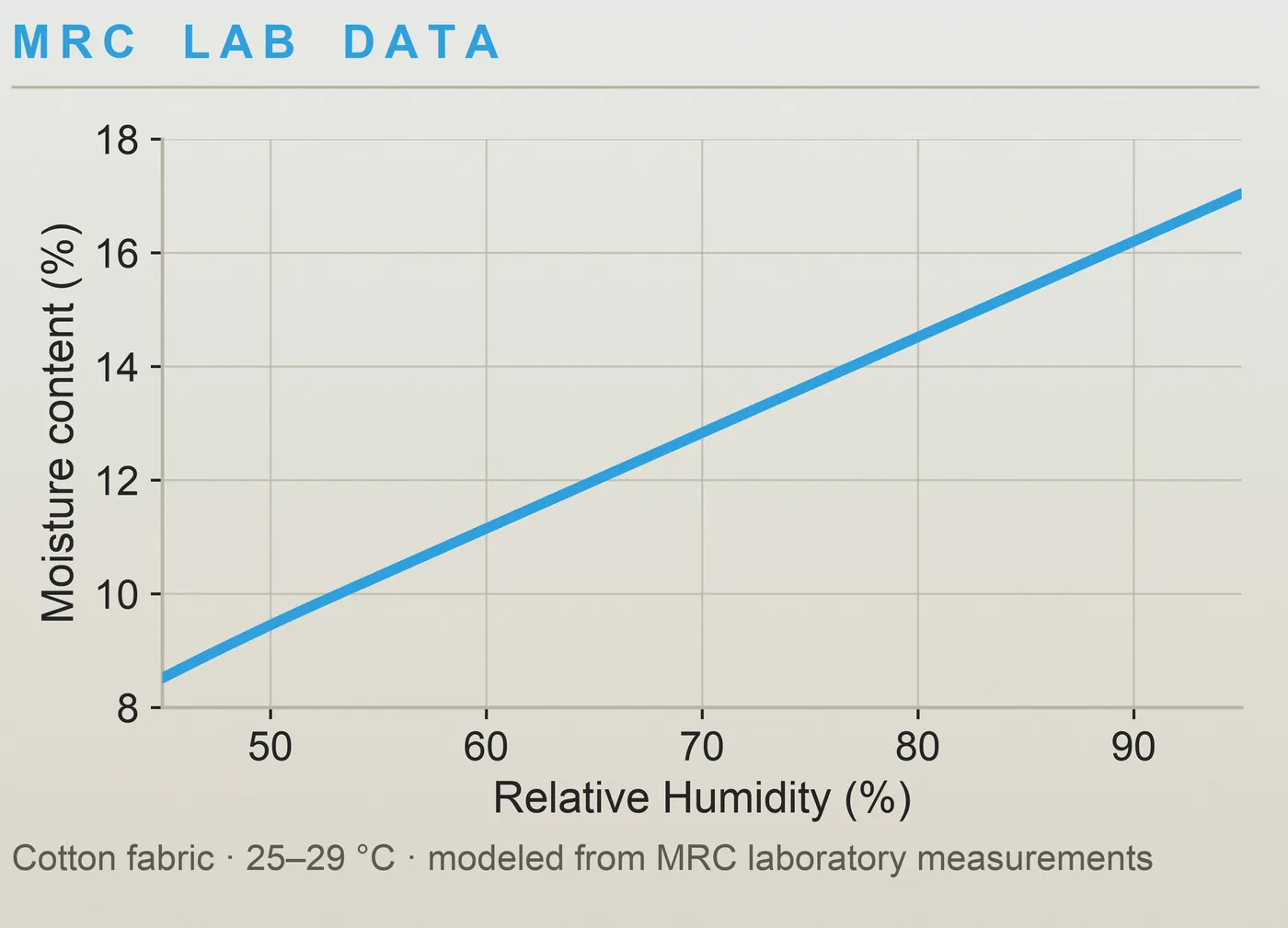
The curve is a model fitted to Mold Research Center moisture-meter readings and anchored to factory-floor readings; values above the measured range are extended linearly.
You should watch for a lingering musty scent in your wardrobe, dark shadow lines along curtain hems, or sticky patches on carpet backings. To prevent issues, avoid letting curtains, rugs, or thick fabrics press against cold exterior walls for extended periods, and make sure to wash or sun-dry them regularly.
Air-Conditioning and Ventilation Systems
AC units, air ducts, and insulation also regularly collect dust and condensation. When filters go too long without cleaning, they trap spores and moisture only to blast them across every room in the house.
Look for a heavy musty odor the moment the AC kicks on, visible dark patches on vents, or chronic moisture pooling near duct lines. You can prevent this by cleaning your air-conditioning filters and drain trays at least once a year to cut off spore accumulation at the source.
Coated and Composite Materials
Decorative walls, cabinets, laminated furniture, and adhesive films are vulnerable because if moisture breaches the surface, mold thrives directly behind wallpaper or synthetic film layers where air cannot circulate. Many decorative coverings have paper or fabric backings that hold humidity and supply nutrients. Yellowish discoloration, loose seams, or soft air bubbles lifting off the wallpaper can be signs of mold. To keep these materials safe, ensure rooms maintain balanced ventilation and humidity levels. If you catch these signs without seeing active mold, check your indoor humidity before rushing to repaint or replace materials.