Partners in Rot
MOLD NEWS HUB
How species interactions shape decomposition
Decomposition is driven by communities of fungi.
The interactions between these species determine how efficiently organic matter is broken down.
Decomposition Seen in Nature and At Home
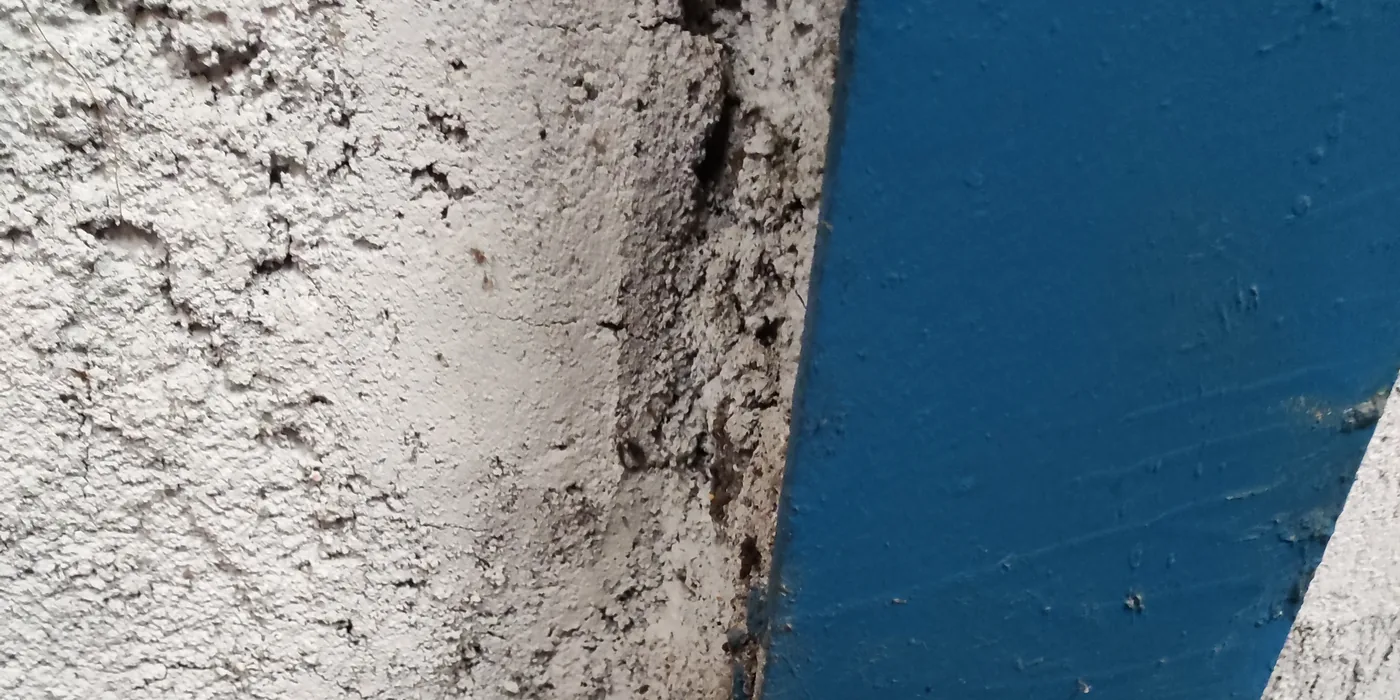
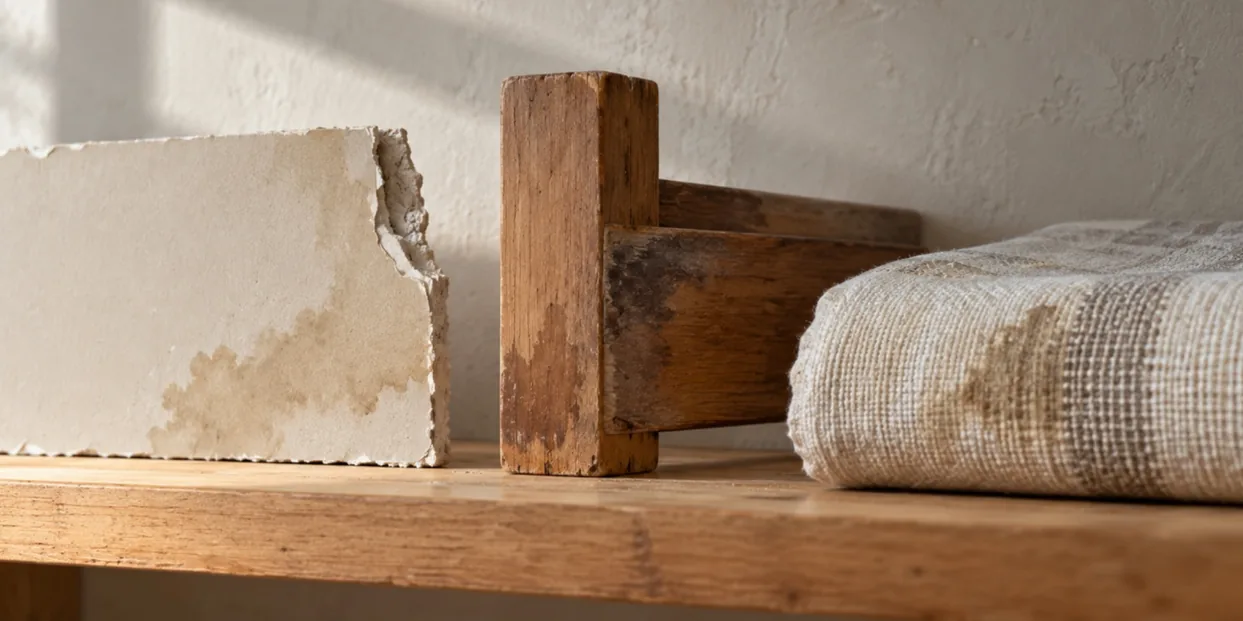
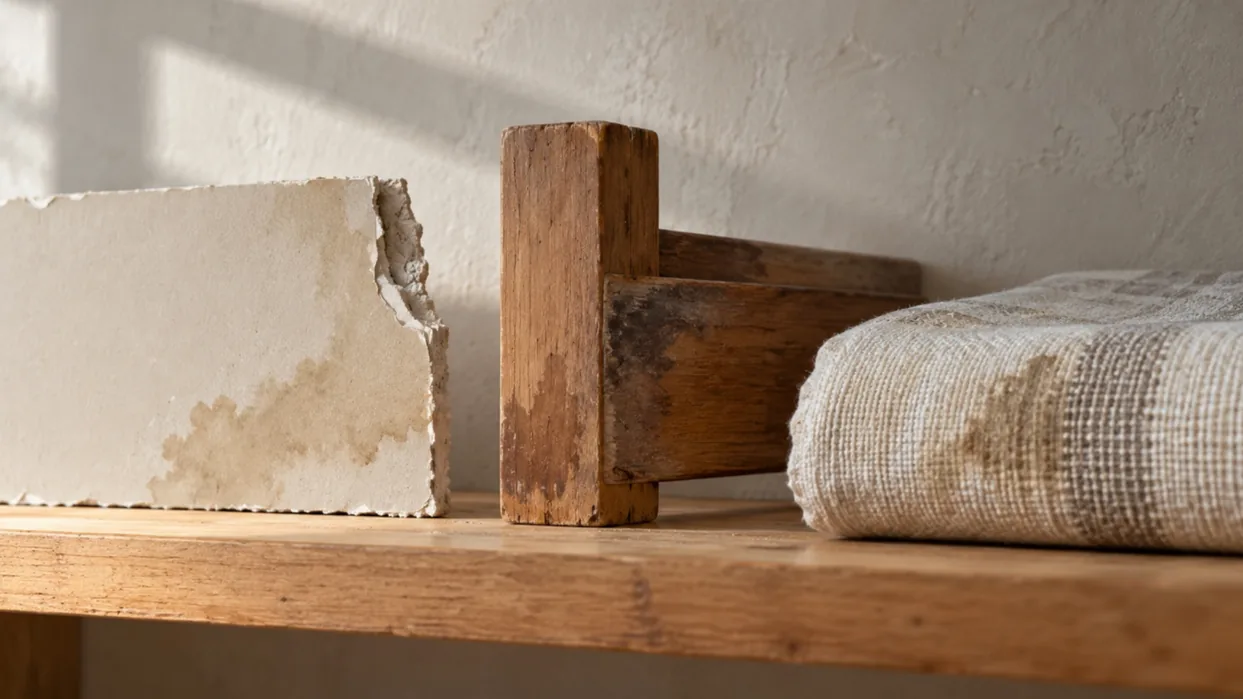
Decomposition appears to follow a simple pattern, both in home materials and in the forest. When leaves fall to the ground, organic matter accumulates, fungi colonize the material, and nutrients gradually return to the soil. Similarly, when household moisture accumulates on organic materials, such as the cellulose in drywall paper, the lignin in wooden furniture frames, and the protein-rich fibers in wool and silk textiles, fungi start growing.
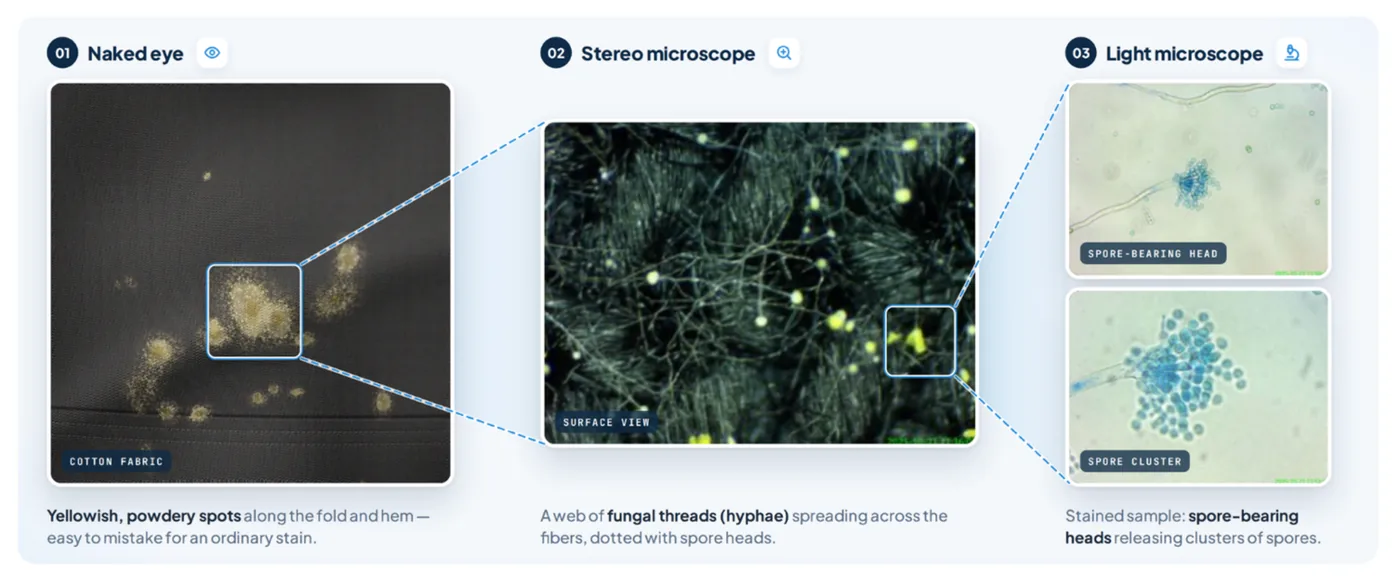
But beneath the surface of these organic materials, a community of fungi actively works by competing, cooperating, and chemically interacting in ways that dictate how fast the organic matter breaks down. The speed and completeness of decomposition are not fixed properties of the material itself; rather, they depend on the fungal community.
The Interaction Between
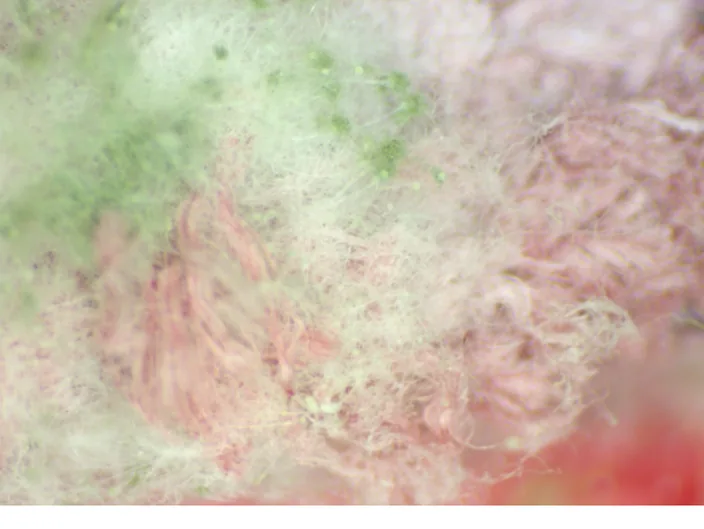
Photo: Mold Research Center
Most people expect that more species mean a more functional ecosystem. However, it has been found that the decomposition activity of fungal communities is capped at four species. Any more species than that does not improve performance and can even reduce it. This shows that the composition and interaction structure of a community matter far more than its size. Four species interacting in the “right” way always outperformed larger communities interacting in the “wrong” way.
Fungal communities function as systems, competing with and complementing each other. Some species group divide the biochemical labor. One species breaks down cellulose efficiently, another targets lignin, and a third processes the chemical byproduct. This allows the community to process complex organic material much more thoroughly than any single species could achieve alone.
Other combinations are dominated by competition for substrates. When multiple species require the same resources, they interfere with one another rather than supporting collective function. The total decomposition rate drops not because individual organisms are less capable, but because their interactions generate friction instead of synergy.
Both dynamics can occur within communities of the same size. It all really comes down to which species are present and how their functional profiles relate to one another.
Matter of Material
The material itself sets the rules for how well these fungi interact together. Complex, rich forest litter or heavily layered building materials present a diverse mixture of nutrients, enough for different fungal species to utilize different components, increasing efficiency. On the other hand, simpler substrates have a more direct competition for limited resources. Under these conditions, adding more fungal species increases competition, causing overall performance to suffer.
Because which material is a depending factor, an optimal community composition for decomposition is never universal. A combination of species that excels at breaking down one type of substrate may perform poorly when given another.