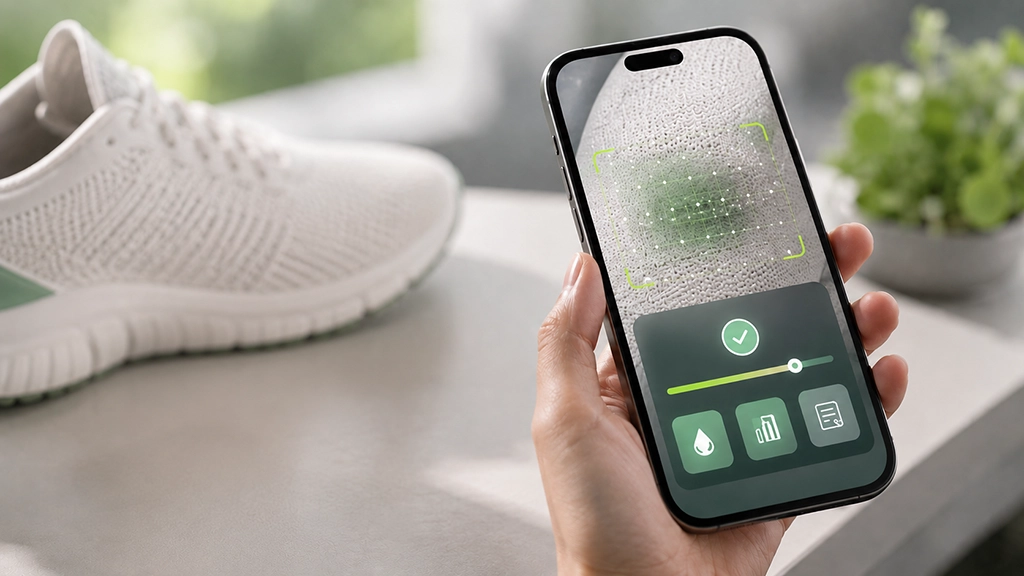
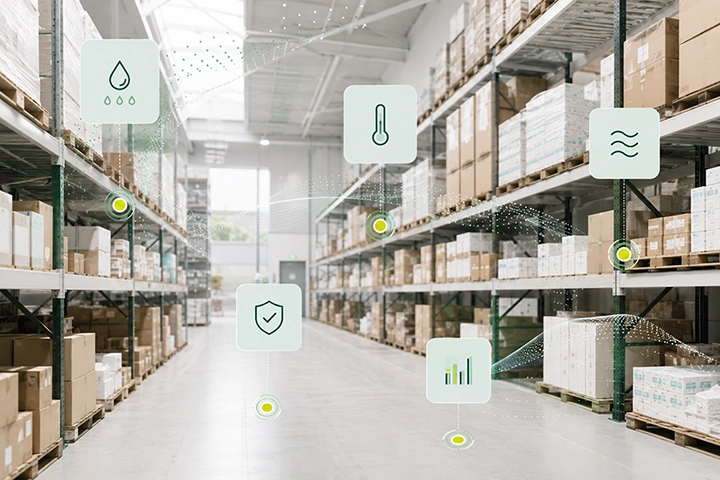
Space AIoT: Turning Environmental Data into Mold Risk Intelligence
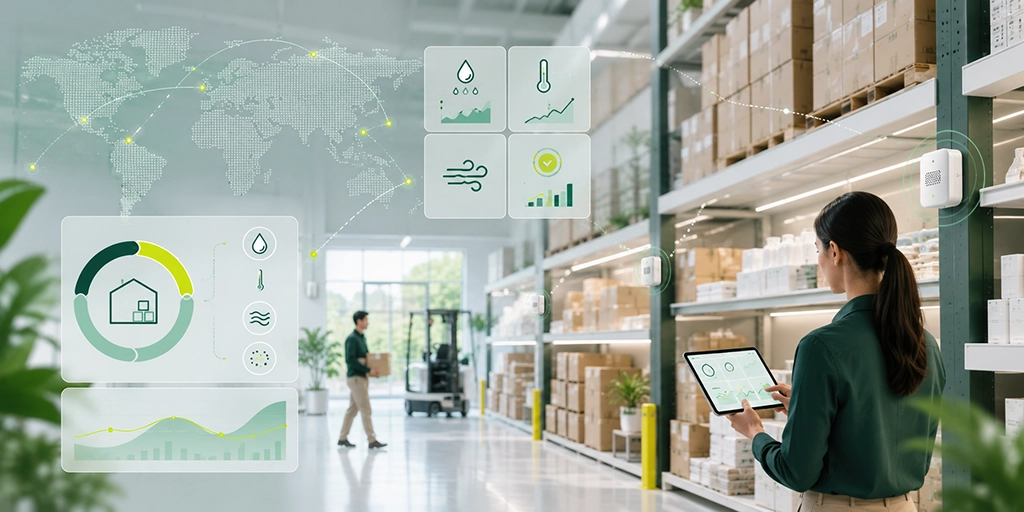
Mold risk is not only a product issue.
It can also be an environmental issue.
A product may look acceptable at the time of inspection. A warehouse may seem organized. A shipment may appear under control. But the conditions around products — temperature, humidity, airflow, storage time, packaging, and environmental change — can influence whether risk becomes visible later.
That is why YCM created Space AIoT.
Space AIoT helps teams monitor environmental conditions and turn scattered environmental data into clearer mold risk intelligence.
It is not simply about collecting numbers.
It is about helping people understand what those numbers may mean, where risk may be building, and when earlier action may be needed.
Why Environmental Conditions Matter
Mold-related risk is closely connected to moisture and environmental conditions.
The World Health Organization explains that microbial pollution includes many species of bacteria and fungi, including mould, which can grow indoors when sufficient moisture is available.
World Health Organization — WHO Guidelines for Indoor Air Quality: Dampness and Mould
ASHRAE also identifies indoor dampness and mold as building-performance issues that can be connected to moisture, humidity, and environmental control. Its position document on limiting indoor mold and dampness notes that early warning signs can be monitored with instruments, including signs related to moisture and indoor air humidity.
ASHRAE — Limiting Indoor Mold and Dampness in Buildings
For global brands, factories, warehouses, and product teams, this creates a practical challenge:
Mold risk may begin as an environmental signal before it becomes a visible product issue.
If teams only respond after visible problems appear, they may already be late.
Space AIoT was built around this earlier layer of risk.
It helps make environmental conditions easier to monitor, compare, and understand.
From Environmental Monitoring to Environmental Intelligence
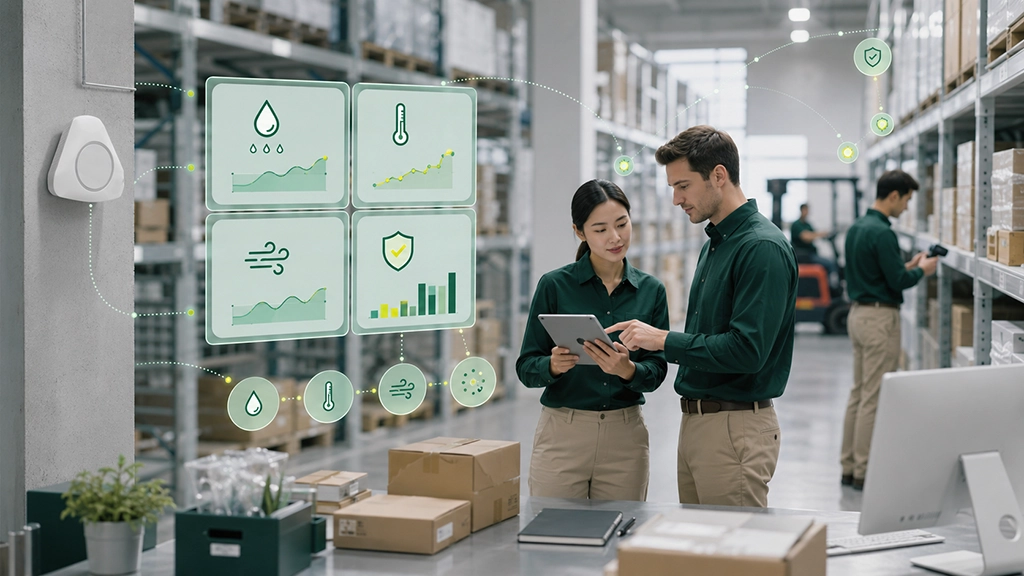
Many monitoring systems can collect temperature and humidity data.
But data alone is not enough.
A number on a dashboard does not automatically tell a team what to do. A short-term spike may not mean the same thing as a long-term pattern. A single humidity reading may not matter as much as repeated changes across zones, storage areas, or time periods.
Space AIoT is designed to help teams move from environmental monitoring toward environmental intelligence.
That means helping users understand:
- what conditions are changing
- where changes are happening
- whether a pattern may require attention
- how environmental signals connect to mold risk management
- what next step may make sense
The goal is not to create alarm.
The goal is to create earlier visibility.
Seeing Patterns Before Problems Become Visible
Mold risk is often difficult to manage because environmental conditions can shift quietly.
Humidity may rise overnight.
A storage area may behave differently from another zone.
Packaging may hold moisture longer than expected.
A warehouse may experience repeated condition changes during loading, unloading, or seasonal transitions.
Without monitoring, these signals can remain invisible.
With Space AIoT, teams can begin to see patterns.
This makes it easier to ask better questions:
- Which areas are more stable?
- Which zones change more often?
- Are certain products stored under higher-risk conditions?
- Are environmental conditions improving or becoming less stable?
- Does a product issue connect to a location, time period, or storage pattern?
These questions matter because mold risk management is not only about reacting to visible signs.
It is also about understanding the conditions that may allow risk to develop.
Supporting Warehouses, Factories, and Quality Workflows

Space AIoT can support different operational environments where conditions matter.
It may be relevant for:
- warehouses
- factories
- product storage areas
- packaging areas
- shipment preparation zones
- quality control rooms
- supplier facilities
- brand-side product protection programs
In these environments, environmental data can help teams make more informed decisions.
A monitoring system can also help teams keep more structured records. WHO guidance on temperature and humidity monitoring systems for storage and distribution notes that monitoring systems can collect data over time so that trending and risk analysis exercises can be conducted.
WHO — Temperature and Humidity Monitoring Systems for Storage Areas
For YCM, this is the key point:
Environmental data becomes more valuable when it helps people understand risk earlier.
Space AIoT helps turn that data into a more usable part of the quality workflow.
Why Documentation Matters
Environmental concerns can become difficult to manage when information is scattered.
A factory team may notice a storage issue.
A warehouse team may see changing humidity levels.
A quality team may receive product concerns later.
A brand team may need to understand whether the issue is isolated or connected to a broader condition pattern.
Without records, these conversations can become subjective.
Space AIoT helps create a clearer environmental record.
That record can support:
- internal review
- supplier communication
- quality discussions
- environmental condition tracking
- product protection planning
- earlier risk response
- long-term mold risk management
The value is not only in the sensor.
The value is in the visibility the sensor helps create.
Space AIoT in the YCM Mold Risk Management System
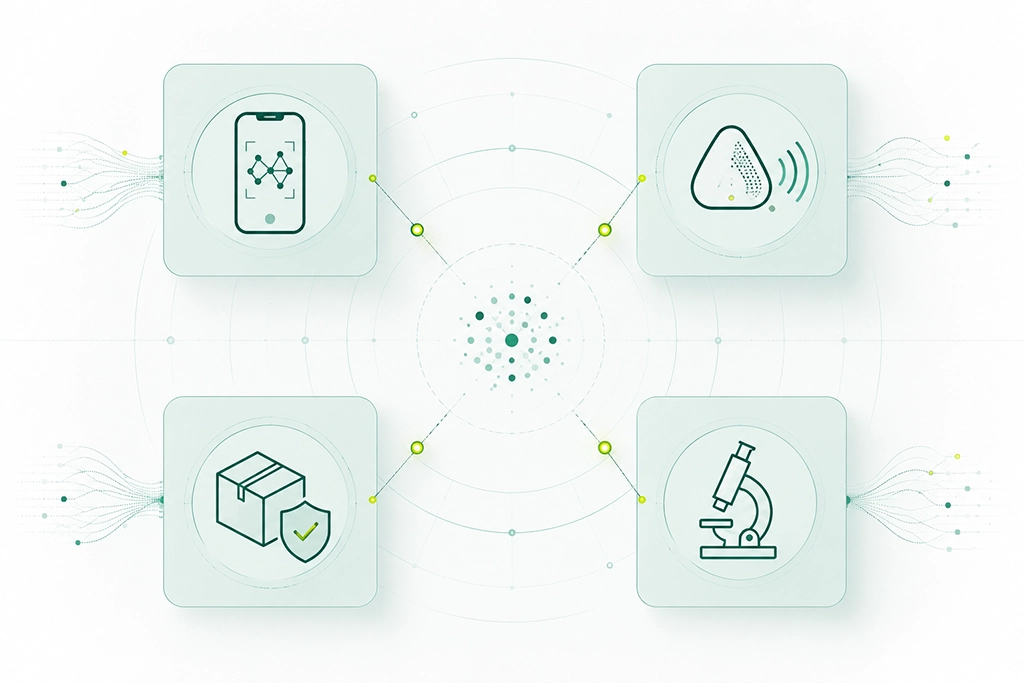
YCM does not view mold risk as one isolated issue.
Mold risk can be connected to product materials, packaging, humidity, storage, logistics, environmental change, inspection, and verification.
That is why Space AIoT is part of a broader YCM approach to mold risk management.
Within this system:
Mold AI+ helps make mold-related concerns more visible.
Space AIoT helps turn environmental conditions into risk intelligence.
YCM Solutions help support product protection and micro-environment management.
MRC provides research, testing, and verification support.
Together, these capabilities help teams move from reactive problem-solving toward earlier visibility and better-informed decisions.
Mold AI+ helps users begin with what they can see.
Space AIoT helps teams understand the conditions they cannot easily see.
A More Practical Way to Manage Environmental Risk
Environmental risk is often invisible until it becomes operational.
A number changes.
A pattern repeats.
A storage area becomes less stable.
A product concern appears later.
Space AIoT helps bring those environmental signals into view.
It does not replace professional judgment.
It does not guarantee that every risk can be predicted.
It does not turn environmental data into automatic answers.
It creates a more practical foundation for earlier understanding.
For warehouses, factories, product teams, and quality workflows, Space AIoT helps teams monitor conditions, recognize patterns, and make more informed decisions before small signals become bigger problems.
Make Environmental Risk Easier to Understand
Space AIoT helps turn environmental conditions into clearer visibility, structured records, and mold risk intelligence.
FAQ
What is Space AIoT?
Space AIoT is YCM’s environmental monitoring and intelligence capability. It helps teams monitor conditions such as humidity, temperature, and environmental change, then use that information to better understand mold risk signals.
Is Space AIoT just a sensor system?
No. Space AIoT is not only about collecting sensor data. Its purpose is to help turn environmental data into more useful mold risk intelligence for warehouses, factories, product storage, and quality workflows.
How does Space AIoT help with mold risk management?
Space AIoT helps teams monitor environmental conditions that may influence mold-related risk. By making humidity, temperature, and condition changes easier to track, it supports earlier visibility and better-informed decisions.
Where can Space AIoT be used?
Space AIoT can support environments such as warehouses, factories, product storage areas, packaging areas, supplier facilities, and quality control workflows where environmental conditions may affect product protection.
Does Space AIoT predict mold?
Space AIoT helps teams understand environmental signals related to mold risk. It should not be understood as a guarantee or standalone prediction tool. It supports earlier awareness, pattern recognition, and better decision-making within YCM’s broader mold risk management approach.
How does Space AIoT work with Mold AI+?
Mold AI+ helps make visible mold-related concerns easier to scan and document. Space AIoT helps monitor environmental conditions that may influence mold risk. Together, they support both visible risk awareness and environmental risk intelligence.
How does Space AIoT fit into YCM’s broader system?
Space AIoT supports environmental intelligence. Mold AI+ supports risk visibility. YCM Solutions support product protection, and MRC supports research, testing, and verification. Together, they form YCM’s broader mold risk management capability.