Home>MRC NEWS>INFORMATION SHARING>YCM NEWS>One minute to understand the SGS and ITS test report through 5 major indicators.

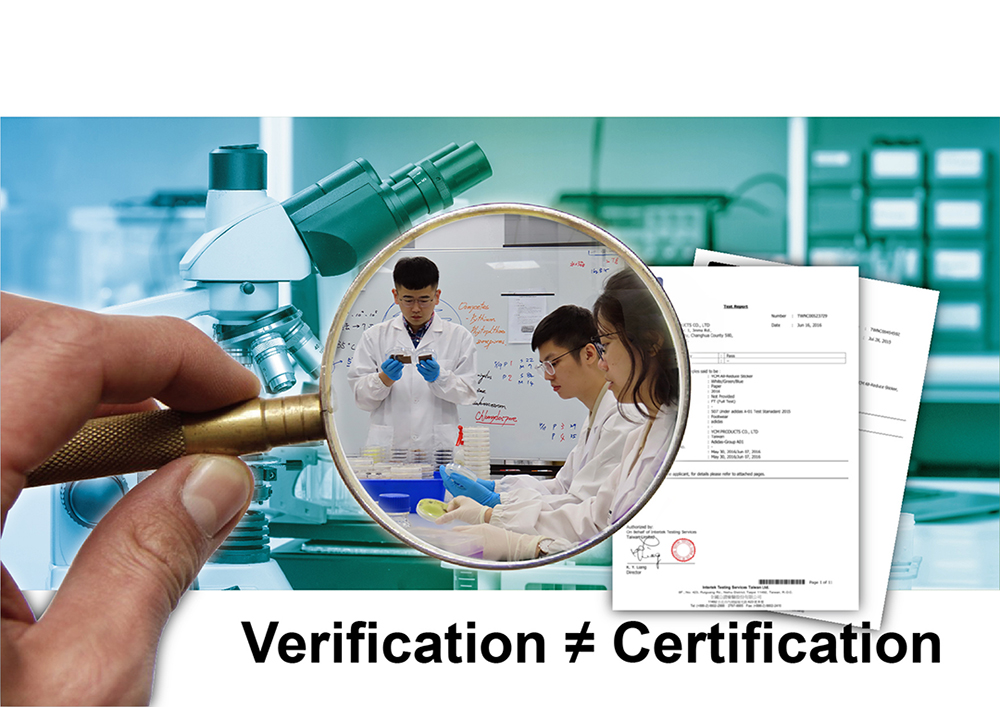
One minute to understand the SGS and ITS test report through 5 major indicators.
Nowadays, many manufacturers provide third-party test reports to prove that their products or services are trustworthy. However, not all reports are equally meaningful. For consumers, it can be confusing to decide which ones are actually useful.
At YCM — the Global Mold Authority with over a decade of applied research and industry collaboration — we have reviewed hundreds of reports from global brands. Our experience shows that “only passing a test” does not guarantee the product meets your needs. The devil is always in the details.
Here are five directions to help you review test reports more critically:
1. Do the test items match the claimed efficacy?
- Case 1: A product claims to be antibacterial but only uses AATCC 147 (qualitative test). This test simply checks whether bacteria grow on the sample surface, without measuring the level of inhibition. In contrast, AATCC 100provides a quantitative result that reveals the real antibacterial efficacy.
- Case 2: A nano-silver spray claims “bactericidal effect” and presents an SGS report. However, the test only measures heavy metals, which is irrelevant to the claimed antibacterial efficacy. This makes the report meaningless.
2. Detailed listing of regulations passed
Every testing regulation differs in scope and reliability. A trustworthy report should clearly list all standards passed.
- Example (YCM All-Reduce Sticker):
- FTTS-FA-018: Deodorization test for textile
- ASTM G21: Mold resistance test (quarterly)
- AATCC 147: Antibacterial test (quarterly)
3. Specify microbial species and antibacterial rate
Look for reports that list the species tested and their inhibition rate.
- Example: “Escherichia coli – antibacterial rate >99.9%”
Even if you are not familiar with the species, the presence of specific Latin names is harder to counterfeit than vague descriptions like “common bacteria.”
4. Do actual ingredients match declared ingredients?
Some manufacturers claim their products are safe by highlighting harmless components while omitting the real active agents.
- Example: A nano-silver spray claims that nano silver itself is harmless. However, its antibacterial action actually comes from silver ions dissolved in water. Multiple studies (e.g., Journal of Nanobiotechnology, 2020) have indicated that silver ions can be harmful to human cells. The mismatch between declared and real ingredients can mislead consumers.
Recommend a popular science website:美的好朋友
5. “Free from PFOA/PFOS” ≠ non-carcinogenic
Passing a test for known carcinogens such as PFOA/PFOS does not mean the product is entirely safe. There may be other undetected chemicals that pose risks. A trustworthy manufacturer should avoid overstating safety claims.
Conclusion
At YCM, we ensure all of our products undergo independent third-party testing with accurate and meaningful methods, not just symbolic certifications. Our mission is to help consumers, partners, and industries recognize reliable test information and avoid misleading claims.
Disclaimer: This article is intended for educational purposes and consumer awareness. It does not replace professional medical advice. Data examples are based on international testing standards and published research.