Mold Contamination in Cosmetics: A Case Study of Natural Products and Preservation Challenges
The growing demand for natural and organic cosmetics has led many brands to reduce or eliminate synthetic preservatives. While this shift aligns with the clean beauty trend, it also increases the risk of microbial contamination, particularly mold. This article examines a real-world case of Penicillium mold contamination in a natural face cream, explores contributing factors such as high water activity, packaging issues, and reduced preservative use, and discusses strategies for prevention. It emphasizes the importance of robust preservation systems, innovative packaging, and routine microbial testing. Regulatory perspectives from the U.S. Food and Drug Administration (FDA) and the European Union (EU) are also considered. The case underscores the need for balancing natural formulations with effective microbial safety measures to protect consumer health and maintain industry trust.
The cosmetics industry is experiencing a significant transformation as consumers increasingly demand natural and organic products. However, the move towards minimal synthetic additives presents a preservation challenge, especially against mold contamination.
Case Study: Penicillium Mold in a Natural Face Cream
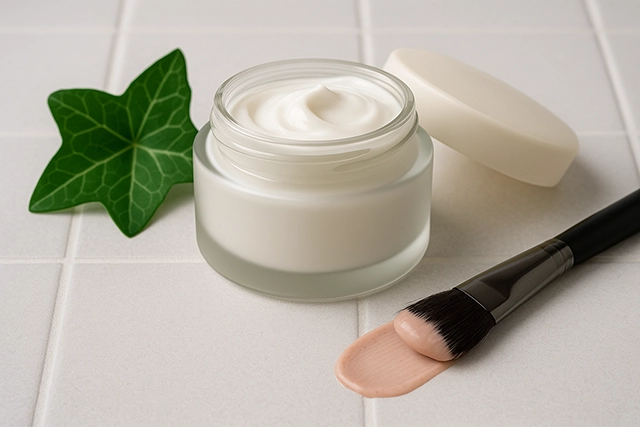
A prominent natural skincare brand recalled its best-selling face cream after microbial testing revealed contamination by Penicillium mold. The incident led to consumer complaints of severe skin allergies, redness, and inflammation. The brand’s preservative-free formula—marketed as part of its clean beauty ethos—ultimately contributed to the product’s vulnerability. Similar cases have been documented in literature, highlighting Penicillium‘s ability to thrive in cosmetic products under favorable conditions (Lundov et al., 2009).
Understanding the Role of Preservatives
Preservatives inhibit the growth of harmful microorganisms such as bacteria, yeast, and molds. Common synthetic preservatives include parabens, formaldehyde-releasing agents, and isothiazolinones, but these have faced consumer scrutiny for potential health effects (Halla et al., 2018). As a result, many brands are substituting them with natural alternatives, though these often provide less effective, narrower-spectrum protection.
Challenges of Reducing Preservative Use
Eliminating or reducing synthetic preservatives increases susceptibility to fungal contamination, particularly in water-rich formulations. Factors contributing to contamination include:
High water activity in creams and lotions.
Packaging design that allows repeated exposure (e.g., jars).
Warm, humid storage environments such as bathrooms.
Weaker antimicrobial properties of natural preservatives compared to synthetic agents.
Health Risks of Fungal Contamination
Exposure to Penicillium in cosmetics may cause allergic reactions, dermatitis, and in immunocompromised individuals, opportunistic infections (FDA, 2023). Contamination also has significant brand and regulatory consequences.
Preventive Strategies
Implement Robust Preservation Systems
Use natural-friendly preservatives such as phenoxyethanol (if permitted), sodium benzoate, or potassium sorbate in combination with plant extracts.
Routine Microbial Testing
Conduct challenge tests to ensure preservative systems inhibit microbial growth (PCPC, 2021).
Innovative Packaging
Adopt airless pump dispensers or single-use sachets to limit contamination.
Consumer Education
Inform users about proper storage and handling.
Antifungal Ingredients
Consider agents such as caprylyl glycol and undecylenic acid.
Regulatory Perspective
Both the FDA (FDA, 2023) and the EU Cosmetics Regulation (EC, 2022) enforce microbial safety requirements. Brands must ensure claims like “preservative-free” do not compromise compliance or product stability.
Conclusion
The Penicillium contamination case demonstrates the vulnerability of natural cosmetics without adequate preservation. Brands should prioritize safety over marketing claims by combining natural formulations with effective antimicrobial protection, robust testing, and innovative packaging.
References
- Lundov, M. D., et al. (2009). Microbial contamination of cosmetic products. International Journal of Cosmetic Science, 31(5), 263–269.
https://pubmed.ncbi.nlm.nih.gov/31166041/ - Halla, N., et al. (2018). Cosmetics preservation: A review on present strategies. Molecules, 23(7), 1571.
https://pubmed.ncbi.nlm.nih.gov/29958439/ - U.S. Food and Drug Administration. (2023). Microbiological safety of cosmetics. FDA.gov.
https://www.fda.gov/cosmetics/potential-contaminants-cosmetics/microbiological-safety-and-cosmetics - European Commission. (2022). Cosmetic Regulation (EC) No 1223/2009.
https://eur-lex.europa.eu/legal-content/EN/ALL/?uri=celex:32009R1223 - Personal Care Products Council. (2021). Microbiological quality of cosmetics.
https://www.personalcarecouncil.org/