Comprehensive Causes of Mold Growth on Wooden Products
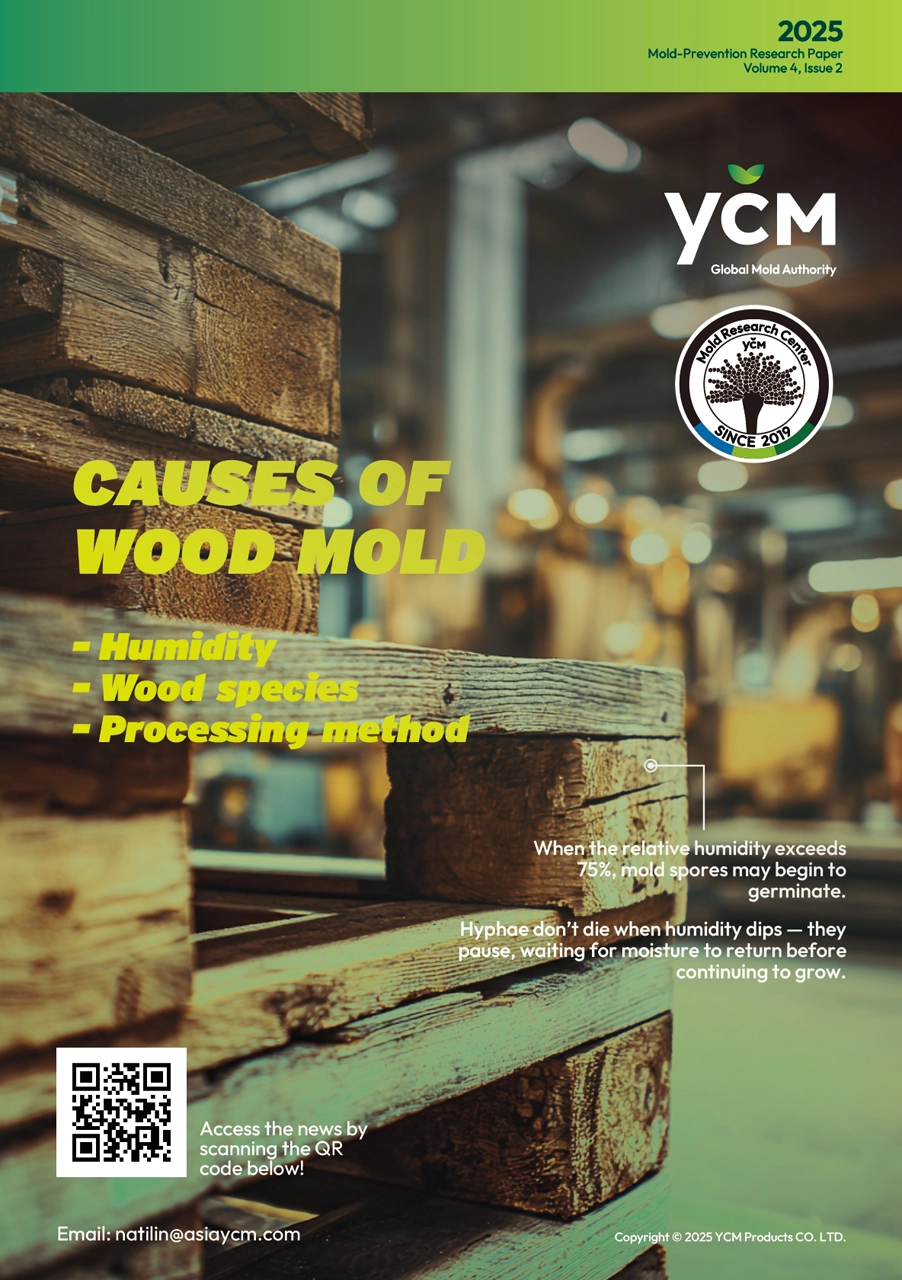
Think mold only grows on “old” wood? In reality, wood’s natural moisture absorption and nutrients make it the perfect home for mold—sometimes in just a few days. From factory pallets and furniture to wooden floors, once humidity climbs above 75%, mold spores can germinate. Studies show that under 97% RH and 20°C, more than half the surface of wood can be mold-covered within 30 days. Even when the air dries temporarily, fungal hyphae don’t die—they pause, waiting for the next wave of humidity. That’s why even clean factories can smell “damp”—because mold is just waiting to grow again. To lower the risk, control isn’t just about humidity. Material type and surface finish matter too. Planed or heat-treated wood resists mold better, while rough or highly absorbent pine pallets are most vulnerable.
👉 Curious why “humidity swings” are more dangerous than steady dampness? Read the full article:“Why Wood Molds: The Interaction Between Environment and Material”
Read PDF→📄
Reference:
Kuka, E., Cirule, D., Andersone, I., Andersons, B., & Fridrihsone, V. (2022). Conditions influencing mould growth for effective prevention of wood deterioration indoors. Applied Sciences, 12(3), 975.https://doi.org/10.3390/app12030975
Ryparová, P., & Rácová, Z. (2024). Characteristics of mould growth in pine and spruce sapwood and heartwood under fluctuating humidity. Applied Sciences, 14(18), 8417. https://doi.org/10.3390/app14188417