Are Climate Change and the Mold in Your Home Linked?
You might not realize it, but global warming and extreme weather are silently reshaping the microscopic world inside your house—the world of mold!
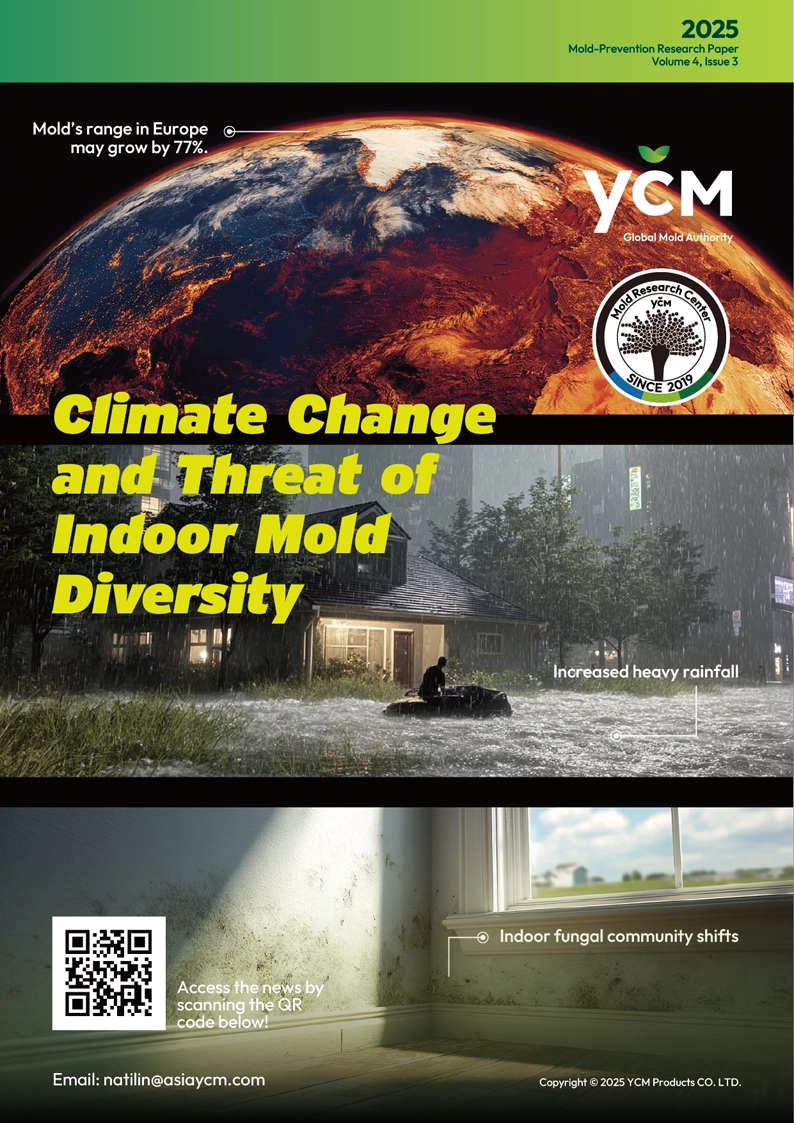
Our latest paper, “Climate Change and Threat of Indoor Mold Diversity,” reveals how climate shifts are impacting indoor mold ecology through three critical dimensions:
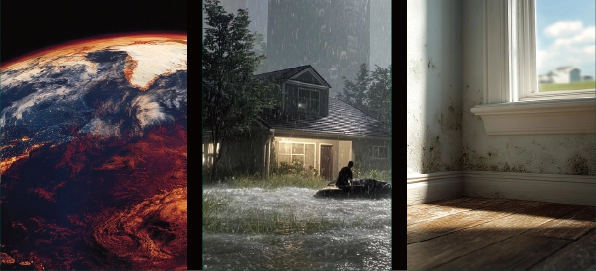
⬆️ Geographic Expansion (Poleward Shift): Rising temperatures are driving molds, once limited to warmer zones, to expand towards higher latitudes. Your region could become a new habitat for unfamiliar species.
⛈️ Extreme Event Acceleration: The increasing frequency of catastrophic rainfall and flooding events creates persistently humid conditions, which act as a powerful catalyst for massive mold outbreaks in buildings.
🔬 Ecological Reorganization: Fluctuations in temperature and moisture are restructuring fungal communities, often favoring dominant, resilient species with enhanced heat and moisture tolerance.
👉 This is more than just an environmental curiosity; it’s a growing threat to building durability, indoor air quality, and human health. Click the link to understand the silent microbial crisis and how we must shift from short-term remediation to long-term climate adaptation!
Read PDF→📄
Reference:
Gange, A. C., Gange, E. G., Sparks, T. H., & Boddy, L. (2007). Rapid and recent changes in fungal fruiting patterns. Science, 316(5821), 71.